There is a specific kind of magic in a pneumatic nail gun. It takes compressed air and turns it into raw force. The physics are simple. Air pressure shoots a nail out of the barrel at high velocity. It embeds deep into the wood. It is accurate. It is fast. For a professional carpenter, this tool is non-negotiable. It saves energy. It saves time.
But not all nailers are the same. A roofer might prefer a coil nailer. They are small. They are lightweight. A framer needs something heavier. Something with more muscle. We are talking about the framing nailer here. If you are building a wall or a floor, this is the tool you need to master.
Setting Up the Framing Nailer
Most framing work starts on the ground. You build the frame flat. Then you raise it. You nail the studs into the joists. Finally, you secure the whole assembly to the plate. To get there, you need to prep your gear.
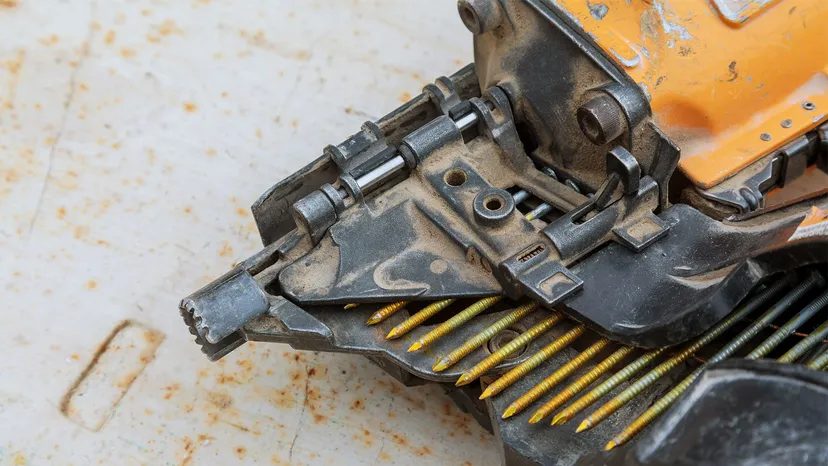
Load the magazine with a strip of 3-inch nails. That is the standard length for most framing tasks.
“Oil the nail strip before loading it. It helps the nails slide out smoothly.”
Here is where many DIYers mess up. They forget the maintenance. Put a few drops of oil on the nail strip. This reduces friction. It ensures the nail exits the magazine without jamming. You also need to oil the air connection. Put drips into the coupling opening. Connect the hose.
Now your gun is ready. It is armed.
The Technique for Toenailing
Sometimes you cannot drive straight down. You have to toe-nail. This happens when you are connecting a stud to a joist at an angle. It is tricky.
Aim for a 45-degree angle. Do not place the tip too far back. The nail will miss the joist entirely. Do not place it too close. The nail will not grip the stud properly. Find that sweet spot.
Your framing nailer has teeth. Use them. The teeth grip the timber. They hold the tool in place. Once the gun is seated, hold it firmly. Pull the trigger. The nail drives through the stud and into the wood behind it.
You need two nails on each side of the stud. After each shot, check the alignment. Is the stud still straight? Move it if it is not. The gun is powerful. One mistake and you are fighting against the wood.
Why Speed Matters (And Why Accuracy Does Too)
Think about the time. A hammer takes about a minute per nail. A pneumatic nailer? Five seconds.
That is a massive difference. But speed is not the only benefit. Precision matters. If you hit the nail at the wrong angle with a hammer, you have to dig it out. You have to re-drift. With a nail gun, if you position the tip correctly, the nail goes exactly where you want. It holds. It stays.
This leads to stronger walls. It leads to solid flooring. The consistency of the tool removes human error.
Safety Is Not Optional
Nails travel fast. They travel hard. If they miss the wood, they fly elsewhere.
Wear safety glasses. Every time. No excuses. Other precautions matter too. Keep your hands clear of the path. Check the backstop. Make sure the nail is going into the material and not bouncing off a knot or hitting a stud behind the target.
The power of the tool is impressive. Respect it. Use it correctly. Build something that lasts.
The frame goes up. The nails hold. The structure stands. What do you do next?