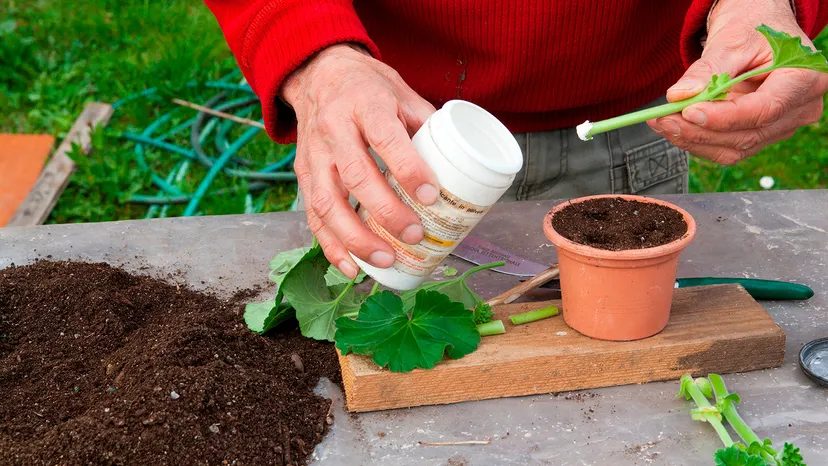
Buying new houseplants is getting more and more expensive. Propagating your existing greenery can reduce these costs. It’s a practical way to grow your collection without breaking the bank. The secret weapon in this process is often rooting hormone.
This substance promotes faster and stronger rooting of the cuttings. It works by mimicking a natural plant growth regulator called auxins. Auxin inhibits the ability of the cuttings to turn into leaves and stems. This forces the cells to fully focus on rooting.
What is rooting hormone?
Rooting hormones are tools for propagating new plants from cuttings. Promotes root development by stimulating stem cells to stretch into root structures. Some plants root easily in water, while others require chemical stimulation.
The main component is auxin. This growth-regulating hormone occurs naturally in plants. Accelerates the natural root formation process. Without this, you may have to wait weeks for roots to appear. This speeds up the process.
Charles Darwin and his son Francis conducted early research on the function of auxin. Their research laid the foundation for modern propagation techniques. Today we use this knowledge to turn one plant to two.
Types of rooting hormones
Not all rooting hormones are the same. It is available in powder, liquid and gel form. You can also see that there are different concentrations.
Serious gardeners often prefer powder or spray options. Less likely to be contaminated by diseased plants than liquid products. Soaking several cuttings in the same container can spread pathogens in liquid form.
Concentration is important. In general, large plants need higher hormone concentrations. Smaller, herbaceous plants, the less you need. Semi-hardwood and hardwood plants require 10-20 times more product than small succulents. It is important to use the right amount. Too much hormone can cause the stem of the plant to dry out or burn. It can also change the color of the plant or prevent it from flowering.
Correct use of rooting hormone
The correct use of hormones can affect the success or failure of propagation. Follow the instructions below for best results.
- Preparation for cutting : Cut off part of the mother plant with a clean knife or scissors. Stem cuttings are the most effective, but the hormone also affects the roots and leaves.
- Hormone use : Dip the cut side of the cutting in rooting hormone. Remove the excess.
- Plant the cuttings : Place the cuttings in a suitable planting medium. Make sure the medium is moist, but don’t overwater. If you over-water, the hormones will be washed away before they can take effect.
- Wait and see : rooting can take weeks to months. The resulting roots are stronger than without the use of hormones.
“Never use rooting hormones when propagating in water, as they are quickly washed out of the cuttings.”
Before you begin, research the specific type of plant you want to propagate. While general label guidelines are a good starting point, species-specific recommendations often yield better results.
Frequently asked questions
Which plants are most sensitive to rooting hormones?
Softwood and semi-hardwood cuttings usually respond well. This includes many common houseplants and garden plants.
Can rooting hormone be reused for multiple cuttings?
No. Repeated use of hormones can spread diseases between plants. Use fresh hormone for each cut to prevent spreading.
Why choose rooting hormone?
You might wonder if it’s worth the trouble. Some plants reproduce without hormones. But for hard-to-root species, hormones can often be the difference between success and failure. Save time. It can improve the survival rate of cuttings.
The process is simple. You need clean tools. The right potting medium is needed. Patience is needed. Roots take time to form. Do not pull on the cutting to check progress. It will only damage the new growth.
Rooting hormones are available at most large and small garden centers. This is an affordable investment in a successful home garden. Your plants will appreciate your help and grow faster and develop stronger roots.
Some plants are still struggling. This is normal. Nature doesn’t always follow instructions. However, with appropriate hormones and treatment, the chances of success increase considerably.


