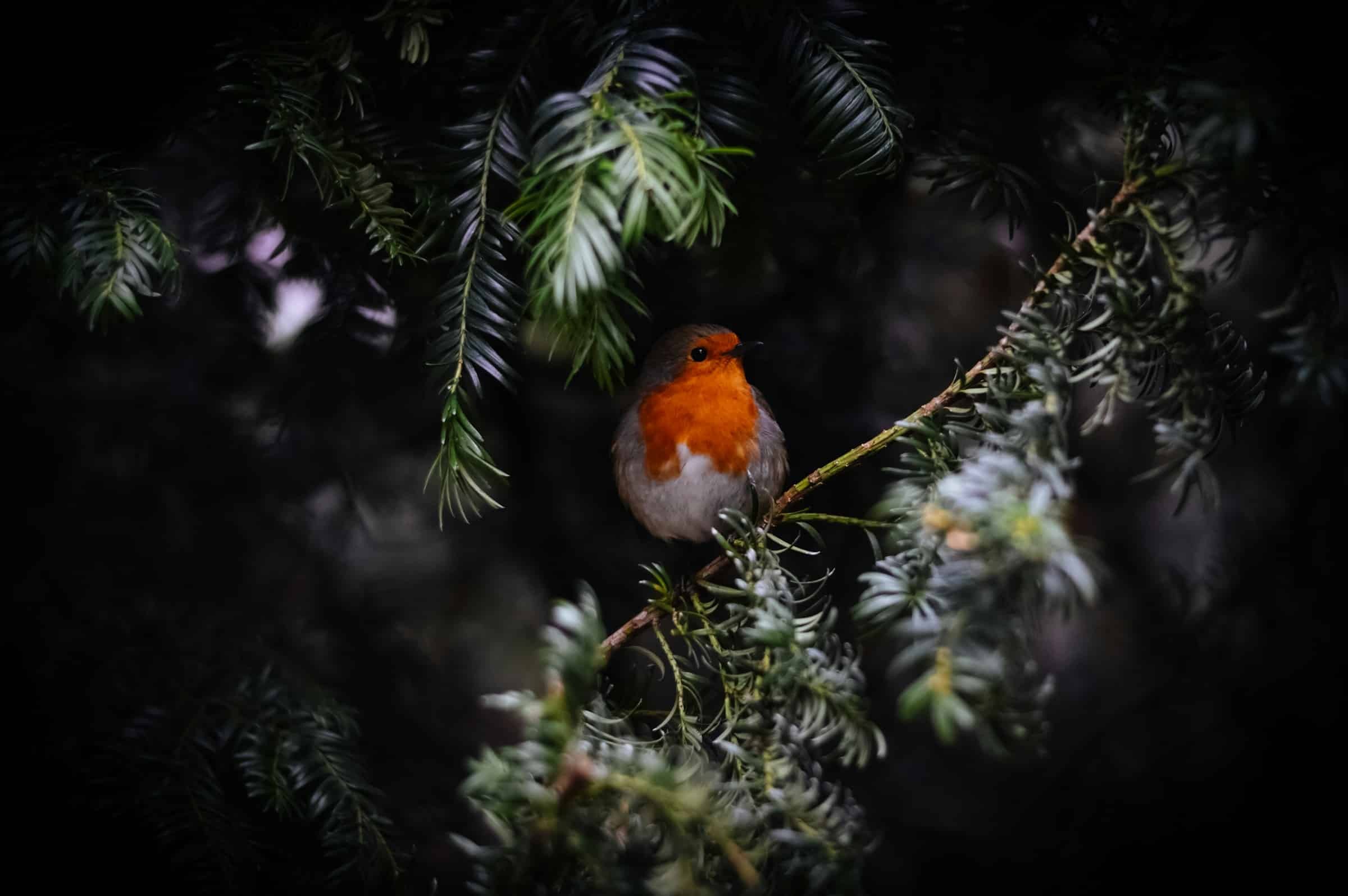
You see them before you hear them. That flash of orange against the grey December sky is the robin. It is the bird that turns your garden from a frozen wasteland into a living room. While other species head south, the robin stays. It defends its patch of lawn with a ferocity that surprises homeowners expecting winter to be quiet.
This connection to the holidays is not accidental. It is a mix of postal history, folklore, and stubborn biology.
How the British Post Office Made the Robin a Christmas Icon
The link between the robin and Christmas is surprisingly industrial in origin. In the 19th century, the British postal service standardized their uniforms in bright red. The postmen wore these scarlet coats, and neighbors started calling them “Robins” because of the color match.
As these “Robins” delivered letters during the cold months, the bird became a symbol of the season. The association stuck. Today, if you look at vintage greeting cards or shop window displays, you will see the orange-breasted bird everywhere. It is the default face of winter cheer.
Why the Robin Has an Orange Breast: Folklore vs. Biology
There are two main stories circulating about why the bird looks the way it does.
The religious legend claims a robin was present at the birth of Jesus. It blew on the fire to keep the infant warm, scorching its breast in the process. That burn turned the feathers orange.
The nature legend is more practical. A freezing robin asked trees for shelter. Most refused. Only the pine tree offered a branch. In gratitude, the robin sang, and the pine was blessed to stay green all year.
Biology offers a different answer. The coloration is genetic. It signals health and status to rivals. But the legends persist because they explain the bird’s behavior. Why is it so bold? Why is it always there? The stories give it a soul.
How to Feed a Robin in Your Garden Without Failing
Robins are ground foragers. They do not hang from feeders like cardinals or chickadees. If you want to support them, you have to get close to the ground.
- Use platform feeders. These are flat, open surfaces. Robins prefer to land on something stable rather than clinging to a pole.
- Go to the soil. Sometimes, the best feeder is just a clean patch of lawn. Scatter food there.
- Choose the right food.
- Fat balls: High in lipids and carbohydrates. Essential for energy in the cold.
- Dried fruit: Apples or berries work well.
- Seed mixes: They will take them, but insects are their primary preference.
- Water is non-negotiable. A frozen pond helps no one. Provide an unfrozen water source. If you have a birdbath, use a de-icer or change the water frequently. Ice is a killer for small birds.
Which Garden Pests Does the Robin Eat?
Think of the robin as a natural pest control worker. It is an insectivore at heart.
It hunts:
– Caterpillars
– Aphids
– Spiders
– Slugs
In winter, when insects are scarce, it shifts to berries and seeds. But during the growing season, its presence in your vegetable garden is a good sign. It keeps populations of crop-destroyers in check. You do not need to spray. You just need to let the robin do its job.
Where to Put a Robin Nest Box for Success
If you want a robin to stay, you need to offer a safe place to raise young.
- Height matters. Mount the box no higher than 1.5 meters (about 5 feet). Robins prefer low nesting sites.
- Face it correctly. The entrance should face away from prevailing winds. This protects the nest from rain and cold drafts.
- Keep it clean. Check the box regularly. Remove old nesting material and clean out parasites. A dirty box is a dead-end.
- Choose the right enclosure. A semi-open design works best. Avoid fully enclosed boxes unless you are certain of your local predator pressure.
Why Planting Hedges Changes Everything
A bare garden is a dead garden for a robin. It needs cover.
- Plant hedges. These provide nesting sites and shelter from predators.
- Choose berry-producing trees. Holly and rowan (sorbier) are excellent choices. They provide food late in the season when other sources dry up.
- Skip the pesticides. This is the most important step. If you kill the insects, you kill the robin’s dinner. A diverse plant life attracts the bugs that keep the robin alive.
- Leave the mess. Do not clean up every leaf pile or dead branch. Piles of dead wood and leaf litter are hunting grounds. The robin finds its slugs and spiders there.
What the Robin’s Song Actually Means
You might hear a robin singing in January. It sounds out of place, right?
It is not a mistake. The robin is territorial. That song is a boundary marker. It is telling every other bird, and every fox or cat, “This is my spot.”
If you hear it near your house, it has adopted your garden. It considers you part of its domain. This is not just background noise. It is a declaration of presence.
A Final Note on the Spirit
Many cultures view the robin as a messenger. Some say it signals hope. Others believe it is a visit from a loved one who has passed.
Whether you buy into the folklore or not, the impact is the same. Seeing a robin in your garden slows you down. It forces you to look at the winter differently. It is a small, orange reminder that life is still moving under the snow.
You do not have to do everything on this list. Just provide water, keep the lawn clean, and maybe leave a pile of leaves. The robin will find you.