You’ll lose the battle before the sun even hits your glass.
Most people hang a fabric curtain inside. They believe they provide shade. They are wrong. As soon as the sun’s rays penetrate through the window, the heat is already in your room. It’s trapped. Energy turns into thermal mass as soon as it touches your floor, your sofa, your skin.
The inner curtain does not block the heat. It catches it. The material absorbs solar energy and then radiates it back into the room air. You get darkness. You do not get coolness.
A film or external blind works differently. It reflects the radiation back out before it even penetrates the glass. This basic physical principle has been ignored for decades. Now the rules of window treatments are being rewritten.
Classic blind trap
Glass transmits a large part of the sun’s radiation. When this energy exceeds a threshold, it is conserved. The larger the window area, the faster temperature peaks occur.
Here’s the mechanics of failure: A blind made of colored fabric traps heat at the fabric level. It then distributes this heat to the surrounding air by convection. It blocks the light, yes. But it heats up the room.
Orientation is important. South window? A plain curtain could provide more privacy at night. But closing it during the day in summer creates a greenhouse effect. The heat is trapped between the glass and the fabric. You sit in the dark and the heat. It’s the worst of both worlds.
The goal is no longer just “shade”. It is an intelligent control of heat and light. You want a pleasant, energy-efficient and visually harmonious interior. No cave.
What will replace interior curtains in 2026?
If you are renovating, ignore the standard roller blind. Check out these three technologies.
1. Screen roller shades
This is probably the most popular solution for combating heat without compromising visibility. The micro-perforated fabric filters the sun’s rays. It reduces glare. It limits heat build-up. The important thing is that you can still see out.
The difference to the classic roller blind is radical. You keep the light. You bypass overheating. Unlike blackout curtains, anti-heat fabrics let in soft natural light. No more “dark room” effect.
2. Honeycomb curtains
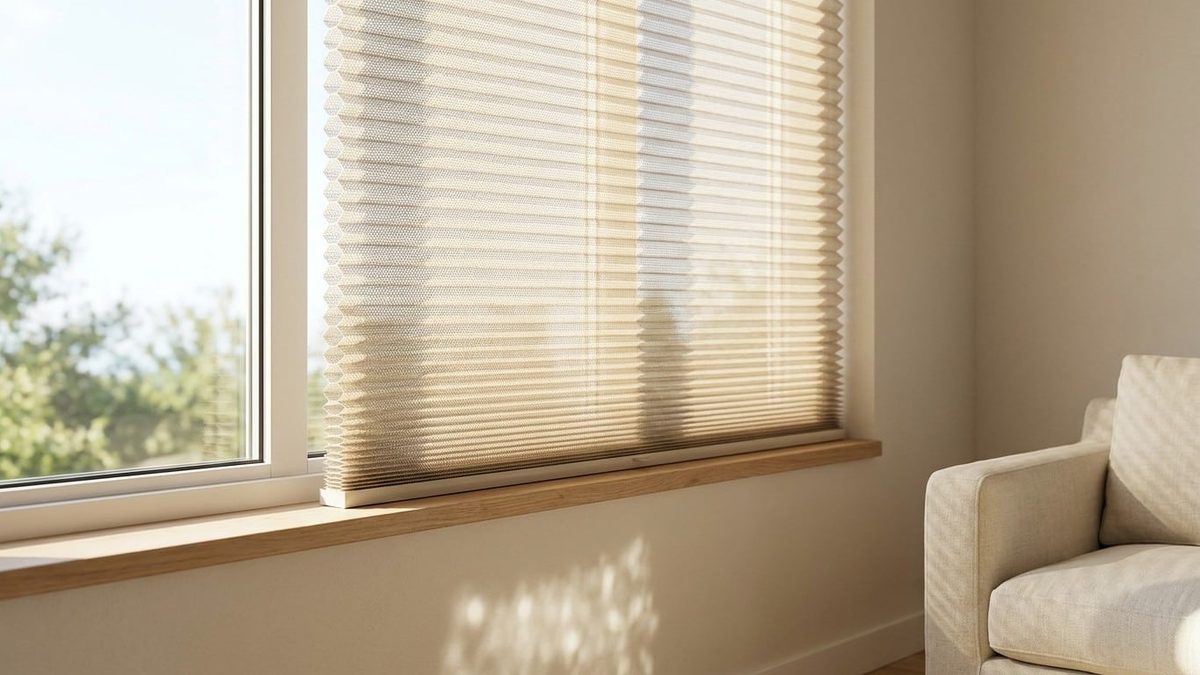
Also called pleated thermal blinds. The design is ingenious because it is unobtrusive. The honeycomb shape traps air. This trapped air acts as a buffer zone and slows heat exchange in both directions.
It is an optimal insulator. In summer it blocks the solar radiation. In winter, it prevents valuable heat from escaping. Double benefit. Normal fabric cannot do this. The secret lies in the air pockets.
3. Solar protection film for windows
This is the third way. Less well known among homeowners, but very effective. Apply this film directly to the glass. It turns double glazing into thermal protection. It can reject up to 85% of solar energy.
The heat is blocked at the source. Brightness is not sacrificed. It is also an excellent cold insulator. Double action. Stay warm in winter. Stay cool in summer. Installation on the inside of the glass takes only a few minutes. It is almost invisible. Some silver-finished models even create a one-way mirror effect from the street. Useful in densely populated urban areas where privacy is crucial.
4. Technical multi-layer curtains
These complete the toolkit. Thermal curtains with an insulated backing play a big role in summer comfort. When placed in front of the exposed glass, they slow down the penetration of heat. They bring a warm, decorative atmosphere to the living room or bedroom.
The fabrics are heat regulating. They adapt their structure to the ambient temperature. Five years ago it was still the marketing fluff. Now that’s true.
Outside or inside: where to put the shield?
Professionals repeat one rule over and over: block the heat before the glass turns it into a heat trap.
The outer curtains act as a protective shield. They are sitting in front of the glass. They intercept the sun’s rays before they hit the surface. The numbers are clear. Outdoor equipment repels heat eight times more effectively than indoor equipment.
Consider external blinds. It can reduce heat gain by 90% before it reaches the window. No interior solution, no matter how well designed, can physically achieve this ratio.
Why doesn’t everyone use them? Installation restrictions. Co-ownership facade rules. High floors. Frequent wind. For apartments or hard-to-reach windows or windows, interior solutions with reflective fabrics or glass films are still the most practical choice.
Combine them for optimal comfort. Use exterior blinds as your primary protection. Add lightweight interior roller shades or sheer voiles to soften the residual light. This does not affect clarity. It increases visual and thermal comfort.
This double protection logic – exterior plus interior – is becoming standard in new buildings and serious thermal renovations. The old way of hanging the curtain and hoping for the best is over. You now have the tools.
Smart blinds and thermal efficiency in 2026
The line between interior design and home automation has practically disappeared. By 2026, connectivity will no longer be a luxury; it is the basic standard. Curtains and blinds have two purposes: they frame the room and actively control the environment. They talk to the thermostat. They react to presence detectors. They adjust to the intensity of the sunlight without you having to lift a finger.
Consider a motorized screen curtain. Previously, these were static barriers. Now they are dynamic. The system monitors the surface temperature of your glass. When the heat exceeds a certain threshold, the blind automatically extends to block sunlight. As the sun sets and the evening light fades, it retracts to let in the glow. This level of accuracy is now available for less than 500 euros per window, and independent solar powered motors are included in the price. You are not buying a decoration. You buy an air conditioner disguised as fabric.
Why choosing a color is a thermodynamic decision
The color palettes that will dominate the year 2026 are not chosen solely based on mood. They are chosen based on their ability to reflect or absorb energy. Light shades such as sandy beige, natural linen, raw greige and off-white are recommended. Why? Because they limit heat absorption. But there’s a nuanced trade-off that most homeowners overlook.
The side of the fabric is important. The dark fabric against the window absorbs infrared radiation and radiates this heat inward, warming the room. A light fabric in front of the window reflects these rays and keeps the room cooler. Color has changed from a purely aesthetic parameter to a thermal variable. If you want passive cooling, you are choosing physics, not just paint chips.
Materials that breathe and prevent
Textile technology has met consumer comfort requirements. The trend is towards materials that are both tangibly attractive and functional. Washed linens with a patterned surface are at the forefront. It’s natural. It breathes. It captures light elegantly without trapping heat. Organic cotton is also on the rise and offers durability as well as softness.
Then there are the hybrid fabrics. These are plant-based technical mixtures in which natural fibers are enriched with heat-regulating components. The result is a curtain that feels like linen but performs like a high-tech shade. Today, a linen curtain can cover as much heat as the inexpensive screen textiles of the 2010s. The gap between “decor” and “performance” has closed.
The economics of passive cooling
The market has changed because the math is undeniable. Over ten years, solar film costs six to fifteen times less than installing or operating an air conditioning system. This is no longer a niche eco-friendly choice. It is the most sensible economic response to record summer heat. Passive protection through windows is no longer an option. It is the preferred solution.
This changes the remodeling checklist for homeowners. You don’t just choose fabrics. You are investing in long-term energy savings. The technology is affordable. The materials are better. The question is no longer whether to upgrade, but of what special thermal properties the local climate requires.