

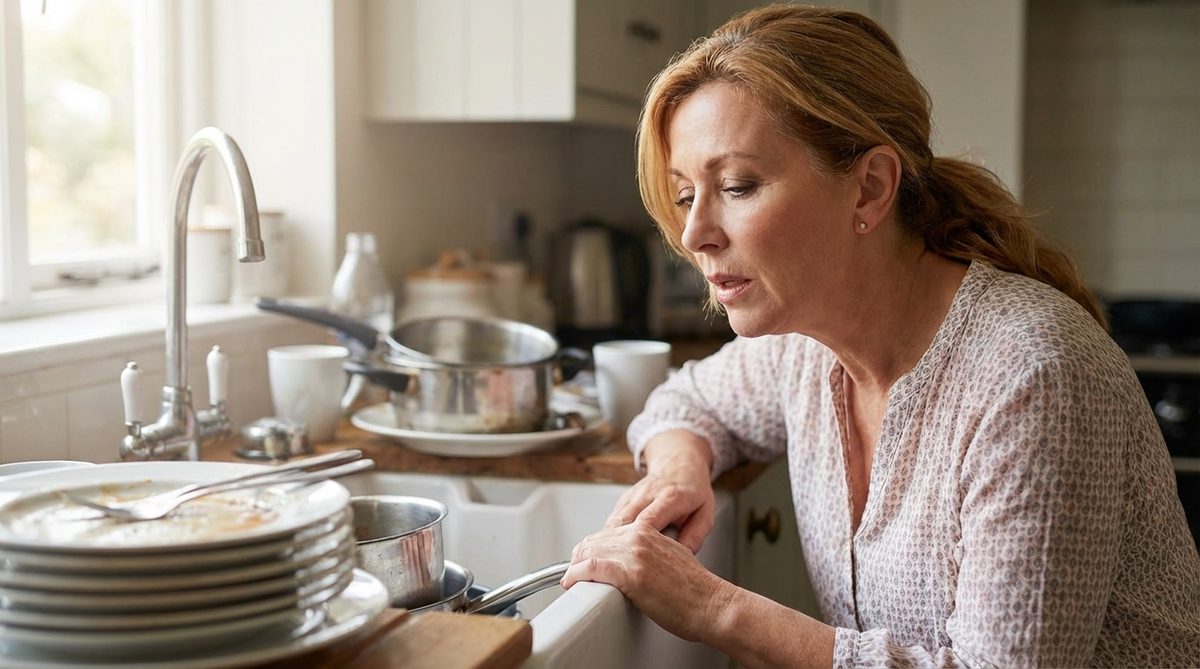
Sparkling gratin dishes. Skillets that stick. Lids coated with a tough oil film. This is the post-cooking reality that kills your momentum before you’ve even had a chance to relax. You want to sit down. You want to eat food. But instead, you find yourself up to your elbows in the sink scrubbing with a bottle of dishwashing liquid that doesn’t seem to have any effect.
It’s a small change that changes the whole dynamic. Stop adding products. Start by using a reused black tea bag.
It sounds absurd. It sounds like a folk remedy that you would throw in the trash. But the logic is sound. It’s practical. It works. You let the hot water and the remaining properties of the black tea soften the grease. The sponge is no longer a weapon, but a simple tool. No fight required.
Why a used tea bag stops the fat trap
The problem with a really greasy pan isn’t just visible oil. It’s the film. That sticky, invisible layer that hardens as it cools. In the pan, it mixes with the cooking juices. On a gratin dish, it clings to the sides. A barely noticeable but incredibly stubborn skin layer forms on the eyelid.
If you try to scrub the area with just soap and a scrub pad, you’ll push the grease around. You’re not removing it. The rinse cycle becomes an endless loop.
The solution is to change the timeline. Instead of attacking the dirt immediately, treat it upstream. You reuse used black tea bags in hot water. This especially benefits the utensils that trap grease in their nooks: frying pans, baking dishes, pots and lids. Spatulas and slotted spoons also help, but they are rarely the main focus.
What happens in water: the power of tannins
Why black tea? Why not green? Why not herbal?
It comes down to chemistry. Especially the tannins.
When you steep black tea, tannins and other polyphenols are released from the leaves. In hot water, these compounds act as binders. They attach to fat molecules more effectively than water alone. This breaks the bond between the oil and the surface of the pan. Disinfection is not the goal. It doesn’t leave a pleasant smell (although it could). The goal is separation. They loosen the grip of the grease on metal or ceramic, so it can be washed away with little physical effort.
Black tea is superior here because of its concentration. It typically contains 13-15% tannins. Green tea? A measly 2% to 4%.
This difference is why a used black tea bag is surprisingly effective. It still contains a significant amount of these active substances.
Of course there are limits. If you have heavily charred food or caramelized sugar residue, this method won’t magically remove it. These require mechanical action or various chemical treatments. But for regular oil-based films? It works.
Zero-Scrub Method: soak, rinse, done
You don’t need any special equipment. You need three things:
- Sink or wash basin
- Hot water
- Two used black tea bags
The process is straightforward.
Fill the basin with hot water. Add two used tea bags. Allow to steep for a few minutes to release the remaining tannins into the water. Submerge your greasy pan or dish.
This is where most people fail: patience.
Don’t soak for five minutes “just to see.” It’s not enough. Aim for 30-45 minutes. The heat needs time to penetrate the fat and the tannins to bind. If the water cools too quickly, add hot water. Do not pour more soap. Soap fights grease; tannins bypass it.
After soaking, the fat should be soft. Take a sponge or a soft cloth. Wipe the surface. You should find that the grime lifts with almost no pressure. Rinse with clean water. If you want, wash normally with a drop of soap, but often soap now only works for polishing, not cleaning.
If the pan is very dirty, change the water and use fresh used bags. Do not stretch a weak solution thinly.
In addition to a clean pan: savings and safety
The immediate benefit is obvious: less detergent. Less time in the sink.
When the grease is pre-loosened, you need significantly less cleaning agent. A few drops do what a squirt used to do. It saves money. It saves time.
Keep this habit by placing a small bowl next to the tea maker. Toss the used bags in there as you go. If you have a stack of greasy pots waiting for you, throw the bags into the water. It creates a natural cycle. You can soak the pan, lid and baking dish in the same batch of tea without refilling between items.
There are precautions.
Black tea stains. On very porous surfaces, light ceramics or certain plastics, tannins can leave a slight tint. Usually it’s faint, but it’s there. After soaking, always rinse thoroughly with clean water. Follow up with a standard wash to ensure no residue remains.
And remember: this is a preprocessor, not a magic eraser. For burnt-on food, it still needs to be scraped off or soaked longer. But for daily use with oily pans? It changes the game.
Keep the tea bags. You keep the water hot. You wait.
The grease softens. The fight is over before it really begins.
The protocol is straightforward. You will need two used black tea bags and hot water. Let them rest for 30-45 minutes. This waiting time moves the mission from combat to passive routine. The heavy lifting happens when you do something else.
The science is simple. Black tea contains tannins. These compounds bind fat. They loosen the connection between the oil and the containers. Fat dissolves more easily in hot water. Softened residues are produced. You rub less. You use less detergent.
This trick does not remove the burnt-in carbon. Nothing really does that without elbow grease. But for the sticky, greasy residue? It works wonders. The food rises from the surface without effort.
Relying on used tea bags makes things easier. Hot water loosens the deposits. Your sponge does its job without fighting the dirt. No special tools required. No new acquisitions. Just a slight reduction in chemical soap usage.
There is a bigger question about housekeeping. How many other everyday habits could be replaced with a gentler, smarter alternative? The answer usually lies in re-evaluating the tools already in place.