



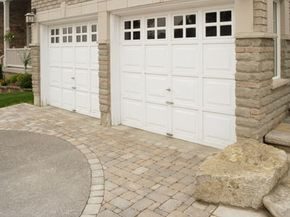
Do you think changing the front door is easy? Just tighten a few screws, wipe away fingerprints and you’re good to go. Ideal for entryways etc. However, things change completely when you replace your garage door. Installing a garage door, either manually or automatically, can be a pain. It is difficult. It is dangerous. If you do it wrong, you could get hurt or your home could become dangerous.
Manual doors are lighter. It’s easier to handle. However, your style choices are limited. The solid oak door of your dreams? Too heavy. Power is needed. Although automatic doors can withstand weight, there are hazards in the wiring and motors that can render them powerless in the event of a power outage.
Please read the following before touching the tool. The following steps are instructions. The manufacturer’s manual is the law. If you’ve never used a wrench or drill, hire a professional. This is not a weekend project for beginners. It’s a risky DIY.
However, if you have experience, let’s talk about the manual route first.
Manual garage door installation: a safe choice
Forget the gadgets. You want a manual garage door. You might be the only person in town who does this. OK, there’s a reason old-fashioned doors aren’t going away. they are safe. Simple. It is easy to repair because it has few moving parts.
If you are installing a standard uninsulated steel door, this is perfect. Simply attach with the torsion spring system. that’s it. There is no motor. No wiring required. All you need is a bits, a hex wrench, hex key and spanner.
When it’s actually put together, it looks like this.
- Install flag brackets and horizontal angle. Screw them firmly into the jamb.
・Connect the torsion tube and spring. Slide them into each bracket. - Measure the release length of the spring. Tighten the torsion tube screw.
- Secure the left drum. Next is the right drum.
· Attach the tube holder. Wind the spring.
Pretty simple, right? This is a mechanical puzzle. If you need comfort, keep reading. But if you want security, this is the way for you.
Why manual doors are safer than automatic doors
You might think automatic doors are safe because they stop when they hit something. The same applies if your child is playing with the remote control. This is not the case with thieves.
Radio controlled motor? It can be hijacked. You can buy a “sniffer” device that reproduces garage door frequencies for less than $50. cheap. Simple. Malicious attackers use these.
And the security sensor that reverses the door? This is a responsibility that falls into the wrong hands. When someone places an object in the path of an automatic door that closes, the automatic door opens. It invites intrusion. Manual doors do not have such defects. They need a key. physical entry. Something harder to steal than a radio signal.
Installing an automatic garage door: power and dangers
Now let’s talk about the motor. Whether you need to install a heavy wooden door or just want to avoid lifting 450 pounds by hand, automated systems are complex. You’ll need a partner. You have to work with electricity. Be careful.
The basic steps are: Note the installation requirements.
- Attach the track to the drive unit. The motor is attached here.
- Connect the rest of the track sections.
- Attach the mounting bracket to the end of the rail. Attach it to the beam above the opening.
- Attach the motor to the roof beam. It is very heavy. Don’t risk the roof collapsing.
- Connect the wires of the ceiling motor to the wall switch.
・Install the infrared sensor. They detect obstacles. - Connects to the garage door opening/closing mechanism.
Looks simple on paper. In fact, there are dozens of small mountings. If one screw comes loose, the whole system fails. Electricity is included. Mistakes can be fatal.
Weight problem
Think you can lift a garage door by hand? Try it! In the event of a power cut, it must be lifted up using springs. This is manageable. But do you want to install it from scratch? That’s not true.
Heavy wood doors can weigh up to 1,000 pounds (450 kg).
You’re not just lifting wood. Balanced tension, alignment and weight. One slip, and the door crashes down.
If you are not satisfied with the steps above, stop. Call a professional. This costs money. But it is cheaper than hospital charges.
You can find more information about home maintenance in the links on the next page.
Where to dig deeper?
The hard work is done. Next comes the research phase. This ensures that you haven’t overlooked any important safety steps or the right tools for the job. The Internet is a treasure trove of details, but wading through it requires a keen eye.
If you’re still struggling with layout or material selection, HowStuffWorks provides an incredibly solid foundation. Breaking down the functionality of a home’s floor plan can reveal the flow of a space in ways that are often left out of manuals. When it comes to enclosures, our guides on roofing materials and Granite Countertops provide the technical “why” behind the “what.” Even niche projects like how Formica works or installing a fiberglass shower and tub surrounds include details that respect the DIYer’s need to understand how it works, not just instructions.
Trusted resource for ongoing support
If your User Guide does not cover a specific task, you need industry standards and benchmarks for energy efficiency. Remodeling Magazine remains the gold standard for cost information and trend analysis. This is not a step-by-step guide, but focuses on understanding what a successful repair project looks like across the country. Use to estimate project scope and budget.
Your Energy Department Home resources are essential to the technical backbone of your home’s efficiency. It doesn’t just tell you how to insulate your attic. Learn how air seals affect HVAC performance. This holistic view will help you avoid the common mistake of solving one problem and creating another downstream problem.
The source behind the proposal
All reliable DIY guides are on the shoulders of experienced installers. The information in this series is cross-referenced with several leading authorities in the field.
- Monte Burch provides practical information on installing garage doors with “Extreme How-Tos” that focuses on the physical reality of working with durable panels and springs.
- Clopay Door provides technical documentation for the EZ-Set torsion spring system, which is important for understanding tension balance (a common point of failure in DIY projects).
- Doors 4 Garages highlights the market niche and functional reality of manual garage doors and reminds us that not all solutions need to be motorized.
- Handy Canadian and Ron Hazelton (via Ron Hazelton’s HouseCalls ) provide a detailed, step-by-step guide to installation and opener integration, focusing on the intersection of manual and automated systems.
- Don Vandervort (via Home Tips ) provides detailed background information on common installation protocols to help identify potential pitfalls in track alignment and hardware tension.
These sources confirm that despite the techniques evolve, the physics of torsion, track alignment and weight distribution remain the same. The next step is to apply these principles to your specific door model. Double check the manufacturer’s manual. Find the torque specifications. Then tighten.