


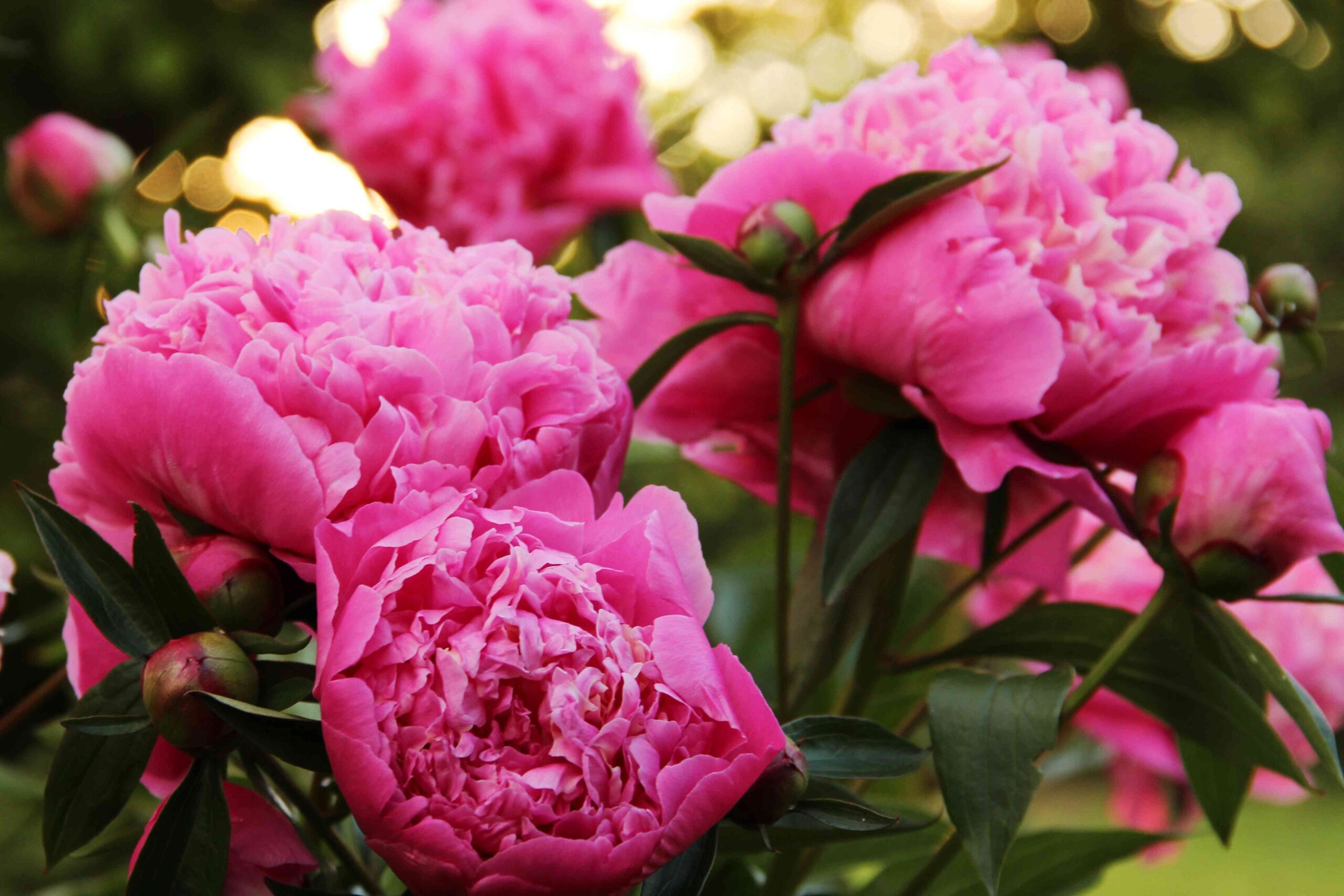
You probably know the four standard peony colors. White, blush, pink, red. That’s what the heirloom herbaceous P. lactiflora offers out of the box. But cultivation doesn’t stop at tradition.
Breeders have pushed boundaries. We now have coral. Yellow. Even purple-ish blooms. It’s a much wider spectrum than you’d expect from a flower that feels stuck in the 19th century.
More Than Just One Type
There are common herbaceous peones. Sure. Then there are tree peonies (Paeonia suffruticosa ) which are actually sub-shrubs, blooming mid-spring with huge fragrant heads for about ten days. And hybrids. Lots of them.
The Itoh peony sits in the middle. An intersectional hybrid. It takes the tree peony’s sturdy habit and mixes it with the common herbaceous variety’s reliability.
Woodland types like P. japonica and P. obovata prefer the shade. Native Europeans like P. officinalis and P. peregrina are sought after for their stark reds. Then you have P. tenuifolia, the fern-leaf peony. The foliage looks like finely cut ferns, but the flowers are a violent crimson.
Planting with Reality
Let’s talk about where they grow.
Peonies need a cold winter. They need dormancy. If you are above USDA zone seven, you are likely out of luck. They just won’t trigger that biological reset without the chill.
They are slow. They are stubborn. But they are easy to keep alive.
The main catch? Gravity. Those blooms are heavy. You stake them. You really have to, especially when rain weighs them down. After that? Just chop the foliage back in the fall and let it sit. Simple.
Staking isn’t optional for big blooms, it’s necessary support against gravity and rain.
White Varieties
White Emperor brings the creaminess. It’s an Itoh variety. Semi-double white petals frame a ring of cream stamens.
Double White does what it says. Bold. Satiny. It blooms from late spring into early summer and doesn’t ask for much.
Pink Variations
Pink isn’t just one shade.
Double Pink starts pale, almost a shell color, then hints at lavender.
First Arrival changes with time. It starts pink. Ages into a softer pastel. The flower itself is big, six to seven inches wide. Right in the center, you see a maroon-pink blaze and a tuft of yellow. It’s busy. In a good way.
Jacorma Pink is structural. Outer guard petals surround a center that’s basically stamens turned into petals. A full body.
Joker is deceptive. Starts double with dark pink edges. Then it ages to white. The pink stays on the tips, though. Picotee effect.
Celebrity is bombe-shaped. Think ice cream scoop. Deep rose petals wrap around a bi-color center that mixes rose and chiffon pink. It blooms midseason and reaches those six-inch proportions.
Raspberry Charm keeps it deep. Dark raspberry pink. Ruffled edges. No confusion about what this flower is doing.
The Striped Option
Candy Stripe needs no explanation. Registered in 1992, it doubles up white and red stripes. It stands out in a field of solids.
Deep Reds
Red Charm earns its name from the bombe shape again. The inner stamens become narrow petals. Tight. Compact. Deep red.
Burgundy Shifts
Scarlet Heaven starts loud. Deep scarlet petals surround gold. But as late spring progresses, the color fades to burgundy. A seasonal transition in one plant.
Peter Brand works differently. It begins as deep red. Six inches wide. But as the season settles, it develops a purple tone. Red-purple. It’s rare. Worth looking at twice.
Purple? Almost.
There is no true purple peony. None.
Agnes Mary Kelway is the closest. Look closely. It reads as purple and white. Up close? Yes. From a distance? It works.
Yellow
Here is where things get interesting.
Bartzella. An Itoh hybrid. Pastel yellow flowers, semi-double to double. But the center? It has a flare. A small burst of rose-purple right in the middle. It spans six to eight inches.
What does coral look like on a peony stem? You’ll have to grow it and find out.