

You know the scenario. The coals go out. You are tired. The burgers are ready. Grab the hose, quickly blast the grates to cool them, and walk away. Ten minutes later you come back with a scraper. The grease isn’t gone. It has hardened into a crusty, black crust that can only be removed with serious elbow grease. You have failed.
This is the most common mistake grillers make. It feels like a solution. It’s actually a trap.
Thermal shock is the enemy of cast iron and stainless steel. When cold water hits a hot metal surface, the metal contracts quickly. This doesn’t just clean; it strains the material. Over time, this repeated shock can warp your grates. It can pop off ceramic briquettes. It can even compromise the structural integrity of the grill body if it is made of thinner steel.
Stop it.
The “clean up later” myth
Many people think they tackle the grill when it’s cold. Big mistake.
Cooking residues – rendered fat, caramelized sugar, protein chains – stick to the metal. Once it has cooled and hardened, it is nearly impossible to remove without chemical strippers or aggressive abrasive pads. These pads scratch the surface. Scratches create small pockets where rust can hide.
Clean the grill while it is warm. Not hot. Warm.
Allow the grill to cool to a comfortable temperature. About 150°F to 200°F. At this point, the fat is still pliable. The carbonized bits are brittle enough to pop off, but are not permanently attached to the metal. You need less physical exertion. You’ll need fewer chemicals. You save the grates.
Chemicals are not crutches
See the stubborn spot? Do you use an aggressive chemical degreaser? Stop.
Most household cleaners are too aggressive for grill surfaces. They can leave behind toxic residues that are transferred to the next batch of food. They can strip away the seasoned layer on the surface of cast iron, leaving it bare and prone to rust. They can corrode stainless steel if left on for too long.
You don’t need bleach. You don’t need ammonia. You need mechanics.
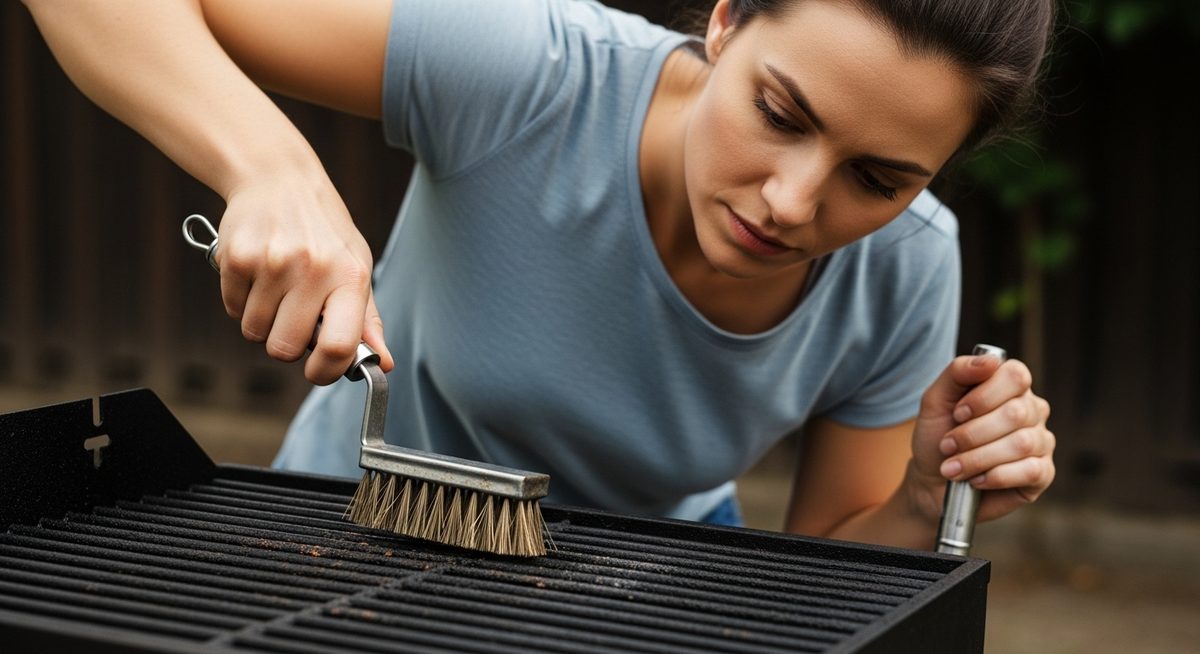
A stiff brass or nylon brush. Grill stone. A paste containing baking soda and water for tough spots. These methods work with the metal, not against it. They preserve the surface. You keep your food safe.
“soaking” which takes time
Some people take the grates off and put them in a bucket of soapy water for hours. Sounds logical. Right?
It’s not.
Soaking cast iron removes the seasoning. The seasoning is a polymerized oil layer that prevents rust and provides a non-stick surface. Once it’s gone, you’ll have to rebuild it from scratch. It takes time. It requires more oil. It requires more heat.
Soaking stainless steel is less damaging, but often ineffective. Water does not penetrate through baked-on carbon. At the end you still have to scrub.
Dry scrubbing when warm is faster. It’s cleaner. It is safer for metal.
Why this is important
Your grill is an investment. A good set of grates will last for years. A poorly maintained one will last for months. The
Stop heat shock: why you should never hose down a hot grill
The sharp crackle of cold water on a glowing grill is a sound heard by every summer cook. For a split second, it feels satisfying. It is also a mistake that damages your equipment.
If you spray cold water on a grill that is still burning hot, it will cause thermal shock. The sudden drop in temperature causes microscopic cracks in enamel and steel. Over time, these small cracks change the surface and promote corrosion. Result? Rougher texture. Food residues stick to rough surfaces. They make cleaning difficult in the future.
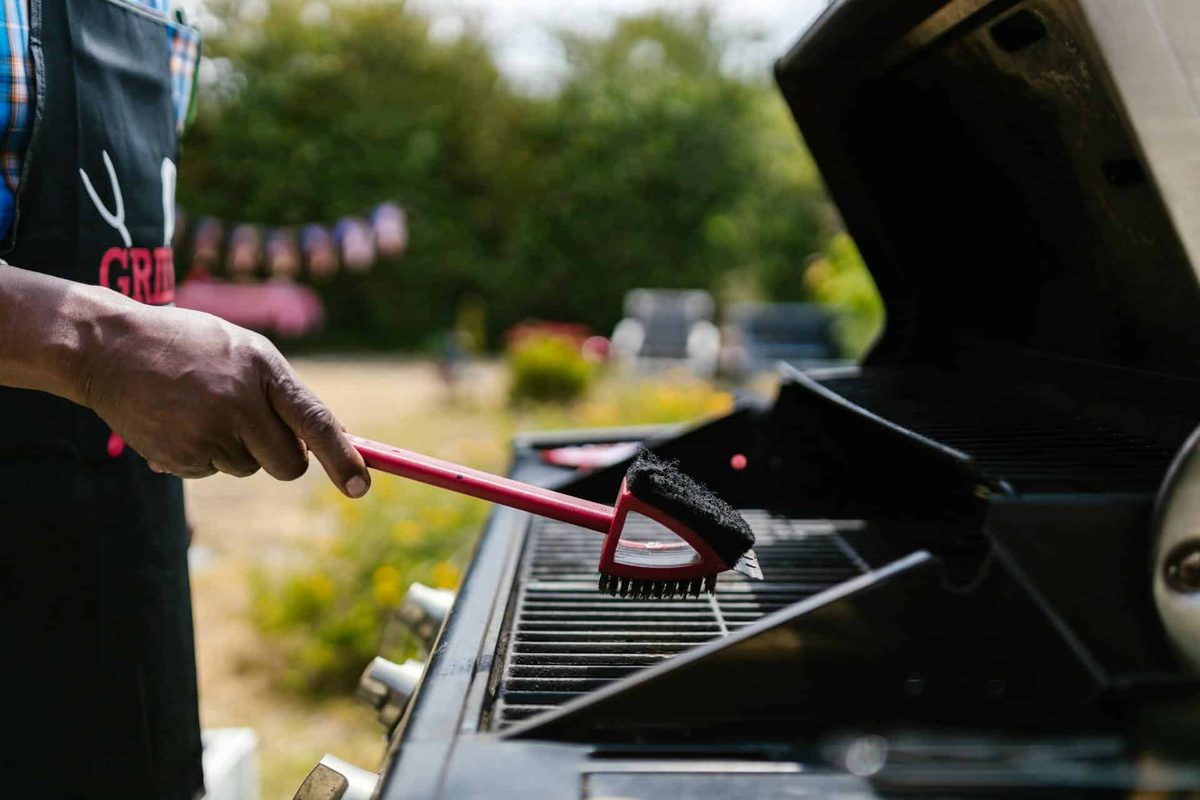
Wait if you want to keep your gear. Allow the rack to cool until it is warm but no longer hot to the touch. Then immediately scrub with a wire brush. Never pour cold water suddenly on a hot surface.
The temptation to clean tomorrow: how stuck-on grease ruins your grill
Fatigue after eating is real. You want to relax. You want to go inside. So you tell yourself you’re going to clean the grill tomorrow morning.
This is a trap. Waiting until the next day guarantees a solid, sticky residue on the surface. When the grill cools down, the fats and pieces of meat harden. They stick to metal. More force is needed to remove them. If you insist on removing hardened dirt with a stiff brush or metal spatula, you can scratch the grate.
Smarter move? Use the residual heat. Brush off the residue while the grate is still warm and the fat is soft. Complete the deep clean after everything has completely cooled down.
Strong chemicals: When aggressive cleaning destroys your grill
Strong chemical cleaners promise great results. They often cause more harm than good. These products corrode protective coatings. They stain surfaces. Worse, they can leave behind dangerous chemical residues that transfer to the food the next time you cook it.
Avoid using industrial solvents. Choose a simple mixture of hot water and baking soda. Use a soft brush to work. This method prevents the formation of adhesive layers without damaging the materials or the environment. Brass brushes or special grill pads also work well. Use them only in moderation. Do not rub as if removing paint.
Forgotten grease pan and the risk of moisture
The grease pan is an often neglected part of the grill. It collects all the drops. Ignoring it will result in unpleasant smoke and possible flames. Leaving old grease in the bowl will also cause lingering odors the next time you light the fire. It also accelerates the wear of the grill body.
Drying is just as important as cleaning. Water remaining on the metal accelerates the formation of rust. After washing, wipe every grate with a clean, dry cloth. Or let the grill heat up slowly for a few minutes to evaporate any remaining moisture. These small details ensure hygiene and protect the structure of your grill for years to come.
- Never wash a hot grill with cold water
- Scrub residues while they are still warm and pliable
- Avoid using too abrasive or chemical cleaning agents on the grates
- Clean the grease drip tray regularly
- Dry the grates carefully to prevent corrosion
Maintaining grills is not a spontaneous pleasure. It’s tedious. But every little decision is important. Avoiding these common mistakes will make cleaning faster and easier. The grill lasts longer. Enjoy authentic flavors in the coming seasons. The question is, do you start applying these measures immediately after your next barbecue, or do you repeat the cycle of damage and repair over and over again.