


Removing old grout doesn’t have to mean buying a specialized tool you’ll use once a year. It’s about matching the method to the mess.
A quick side-to-side vibration can slice through stubborn epoxy in seconds. A manual hook takes twenty minutes and a bit of elbow grease for a single corner. Both work. Neither is wrong. Just pick the right one.
Here is how to choose, based on actual performance and the tools you likely already have in the garage.
The Best Overall: Dremel MM500 Grout Blade
If you own a Dremel Multi-Max or a generic oscillating tool from Bosch, Ryobi, or Milwaukee, stop looking. You just need this blade.
The Dremel MM500 18-Inch Grout Blade is our top pick because it solves the main problem with grout removal: damage. At just 1/8-inch thick, it slips between tiles without gouging the ceramic. Most oscillating attachments are thicker. They dig too deep. You chip the edge. The MM500 stays shallow.
It spins at high speed, grinding away grout in long, continuous lines. This is perfect for a full kitchen backsplash or a large shower wall. It is not great for tight, jagged corners, but for flat stretches? It is effortless.
Pros:
* Works with most brands of oscillating tools
* Won’t scratch nearby tiles due to thin profile
* Navigates standard grout lines easily
Cons:
* Requires an oscillating power tool (not standalone)
Best for Small Jobs: Manual Grout Saw (Hook Style)
Not every job needs electricity. Sometimes you just want to fix a cracked line near the shower drain. Or replace the caulk around the sink. For those moments, a simple steel hook is enough.
This isn’t a fancy gadget. It is a pointed steel tip set in a plastic handle. You dig in. You scrape. You pull the old grout out. It sounds tedious, but for a small spot? It’s fast, cheap, and doesn’t require buying new gear.
The handle often includes cushioning to save your fingers from blistering. And yes, it has a hole at the base for hanging. Keep it in the drawer. Use it when you need to do thirty seconds of work without setting up a vacuum.
Pros:
* Removes grout or caulk with minimal setup
* Comfortable handle reduces hand fatigue
* Includes a hole for hanging
Cons:
* Only for small, isolated jobs
* Not effective on very thin grout lines
Best Electric-Specific Tool: Regrout Tool Grout Remover
What if you don’t own an oscillating tool and don’t want to buy one? There is a niche market for single-purpose electric removers. The Regrout Tool falls here.
It uses two bits: a point and a chisel. It hits grout lines up to 0.33-centimeter thick at up to 7,100 RPM. That’s enough power to clear a bathroom floor in an afternoon. The key advantage? Control.
Because the head is smaller than an oscillating blade, it tucks into corners and around oddly shaped tiles better than bulkier tools. It also produces less dust. You won’t be choking on silica powder in your small bathroom. It does take a few minutes to learn the rhythm, but once you get it? Clean cuts. No scratching.
Pros:
* Consistent and effective removal
* Low dust production compared to larger tools
* Won’t scratch nearby tiles if handled correctly
Cons:
* Steep learning curve
* Dedicated tool (not a multi-use attachment)
Best for Flat Surfaces: Dremel Rotary Kit (568-01)
You have a Dremel rotary tool (the 3000 or 4000 series)? Great. You don’t need an oscillating saw. You need the Dremel Rotary Tool Grout Removal Kit.
This kit includes a guide with a 30-degree angled attachment. The guide keeps your hand steady. Without it, you’re guessing. The kit also gives you a 0.06-inch carbide bit. If your grout is thicker, buy the 0.13-inch version separately.
This setup is ideal for flat countertops or floor tiles. It struggles with corners. The guide gets in the way. But for long, straight runs? It is precise and reliable. Just watch your fingers.
Pros:
* Works with existing Dremel rotary tools
* Excellent for large, flat surfaces
* Great for tight spots if you have good manual dexterity
Cons:
* Tricky to maneuver around corners
Best Heavy-Duty Option: Spyder Grout-Out with Reciprocating Saw
Big grout? Epoxy? Thick cement? You need brute force.
The Spyder Grout-Out attaches to a standard reciprocating saw. These saws move back and forth, unlike the side-to-side oscillation of other tools. The motion is aggressive. It cuts through tough material quickly.
It includes two blades: 0.06-inch and 0.19-inch. Both are carbide-tipped carbon steel. They chew through epoxy like butter. The back-and-forth action actually handles non-rectangular tiles better than oscillating tools, which can catch on edges.
Dust is lower than sanding, but you still need eye protection and a mask. The trade-off is risk. A reciprocating saw is powerful. If you slip, you’ll scratch the tile. Use care.
Pros:
* Works with any standard reciprocating saw
* Produces relatively low dust for its power level
* Highly effective on tough, aged grout
Cons:
* Requires careful handling to avoid damage
* Best suited for thick grout lines
Best Manual Saw: M-D Building Products Grout Saw
For manual work, the M-D saw is a solid choice. It features double steel blades: one serrated, one with carbide bits. You can use both, or remove the serrated one for thinner lines.
The handle is rubberized and ergonomic. Long enough to use with two hands if you need leverage. It acts like a miniature reciprocating saw, but powered by you. It takes effort. It will not be fast. But it works on horizontal surfaces and small repairs.
Pros:
* Specifically designed for small, localized jobs
* Reaches into tight spots between tiles
* Handles thin grout lines effectively
Cons:
* May leave scuff marks if pressure is uneven
Best for Vertical Walls: Coitak Angled Grout Saw
Curling your wrist to remove grout on a vertical shower wall is a recipe for pain. The Coitak Angled Grout Saw fixes that.
The handle is bent. It keeps your wrist in a neutral position while you work against a wall. It holds three blades. It is 5.3 inches long on the straight part, plus 3.75 inches angled. Large hands fit easily. Small hands fit too. It hangs easily for storage.
It is not for a whole bathroom. It is for those patch jobs where you are replacing one or two tiles. Don’t waste power tools on this. Just grab the angled saw and scrape.
Pros:
* Ideal for vertical surfaces like showers
* Won’t scratch nearby tiles
* Includes extra blades for extended use
Cons:
* Only practical for small, vertical areas
Best Ergonomic Manual Tool: QEP Grout Removal Tool
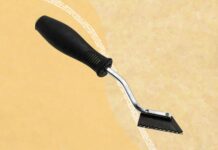
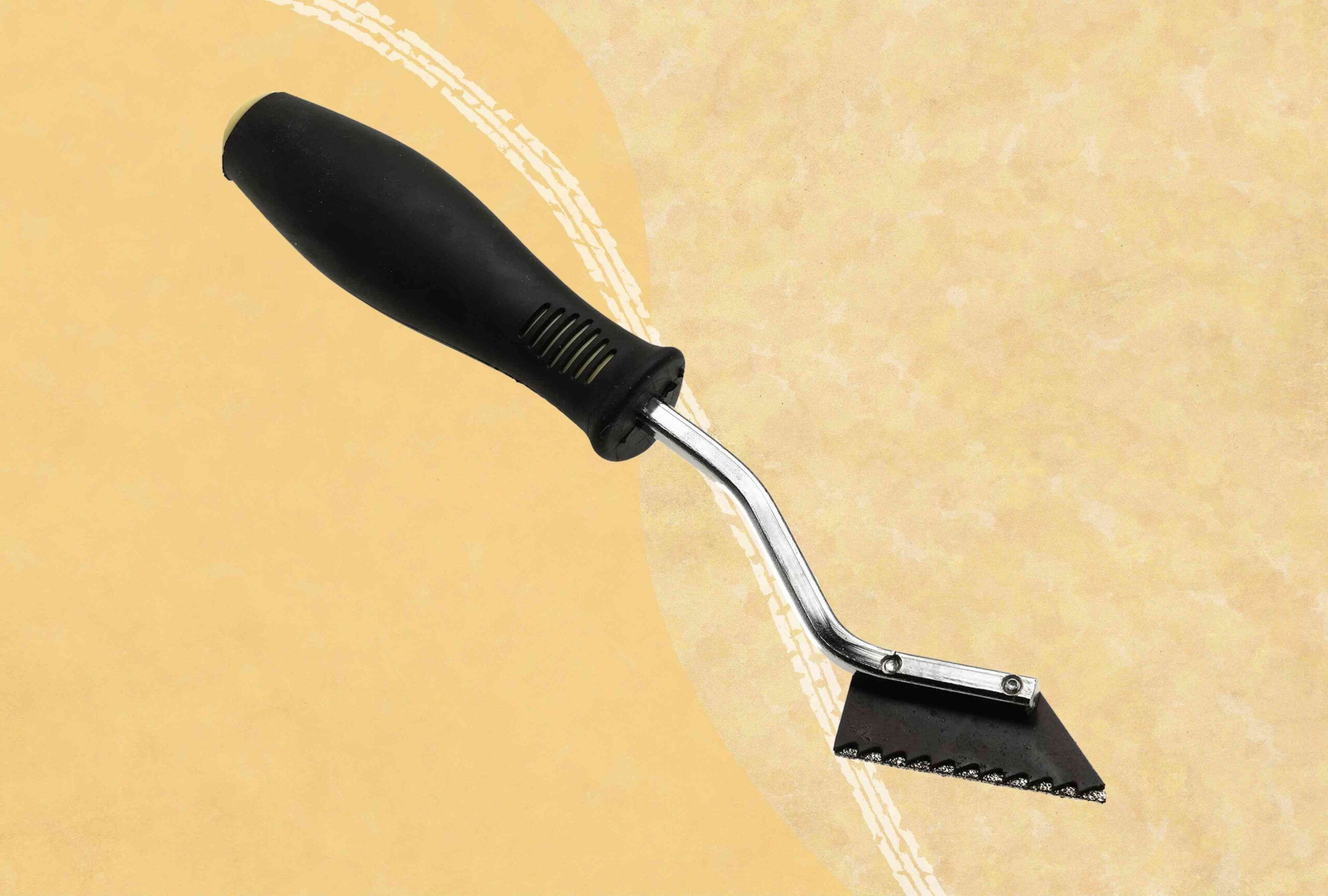
If you hate the feel of a simple hook, try the QEP Grout Removal Tool. It features a triangular carbide steel tip held by a screw.
You can rotate the tip. It has three sides: 0.06-inch, 1.3mm, and 5mm. This means you get three tool widths in one. Rotate the blade to match your grout line. The rubber grip is contoured to reduce strain. It is comfortable to hold, even if you are scraping for an hour.
Like other manual tools, it is for small jobs. Counters, tubs, toilets. It scrapes and lifts caulk well, too. It’s versatile manual power.
Pros:
* Ergonomic design reduces hand fatigue
* Three tip options for different grout widths
* Easy to change or rotate tips
Cons:
* Only suitable for small jobs
* Still requires significant manual effort
Best Oscillating Tool Kit: Enertwist Multi-Tool
Don’t have the blade? Buy the tool.
The Enertwist Oscillating Tool comes with 33 accessories, including a scraper for light grout work. It has a 4.2-amp电机 and goes up to 16,000 OPM (oscillations per minute). It muffles vibration well, which is rare for budget tools.
It uses a universal fit adapter, so you can use blades from other brands. The blade changes without tools. Six speed settings let you slow down for thin lines.
It is a bit bulky for deep corners. You need an extension cord. But for the price? It performs like a cordless model that costs twice as much. It is a solid workhorse.
Pros:
* Six speeds for different grout depths
* Easy to change out blades quickly
* Highly versatile with many accessories
Cons:
* Too bulky for very tight corners
* Requires power cord (not battery operated)
The Final Verdict
Need speed and have the gear? Get the Dremel MM500 Blade. It cuts clean, doesn’t damage tiles, and works with tools you likely already own. It is the definitive answer for “how to remove grout safely.”
Only doing a tiny spot? Skip the electricity. Grab the QEP Grout Removal Tool or the Coitak Angled Saw. They are cheap, ergonomic, and get the job done without the mess.
What to Look For
The type of grout matters. Unsanded grout is soft. Sanded or epoxy grout is like concrete.
- Unsanded: Any tool works. Even a manual hook is fine.
- Sanded/Epoxy: You need power. Oscillating or reciprocating blades are mandatory.
If the grout is old and crumbly, it might soften. Richard Mann, founder of Premier Porcelain, suggests soaking the area with sugar water, lemon juice, and vinegar for up to 20 minutes. It helps. It makes the scrape easier. It saves your tiles from chipping when the grout resists.
A Note on Safety
Dust is the enemy. Silica dust is bad for lungs. Wear a mask. Wear goggles. Even if the tool produces “less dust,” there is still some. It flies everywhere. Cover the floor. Seal the vent.
Don’t rush the corner. It is where most people scratch the tile. Slow down. Let the blade do the work.