

Don’t throw away dull scissors. You can restore them in a kitchen drawer and rerestore them to a perfect cut. It’s not just metal rubbing against metal. It is important to match the technique to the type of blade.
Sharpening Standard Household Scissors
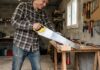
With basic scissors, start with a coarse bench stone. Open the blade fully. Place the blade against the stone. Gently pull the blade towards you. Always keep the edges in contact. Repeat this several times. Next, switch to the finer side of the stone. Or use sandpaper. The goal is to gradual refinement gradually. Don’t jump right into the fine grit of a super dull blade.
Handling Curved Blades
Curved blades require a different feel. Direct sliding movement is not possible. Instead, place the blade against the stone and rock the blade. This keeps the curve in contact with the sharpening surface. Maintain this contact throughout the stroke. It’s not intuitive at first. However, it ensures that the entire edge gets attention.
Dealing with Length Constraints
Because the blade is long, pain to sharpen on a small stone. The entire edge cannot be covered at once. You should work in sections. Start with the pivot. Move towards the tip. Then restart. This requires patience. However, skipping points leaves jagged edges.
Disassembling Pruning Shears
Pruning shears are a completely different animal. It cannot be sharpened when assembled. You have to take them apart. These tools have four different surfaces that require attention. Place each piece on a flat work surface. Use a coarse stone or emery cloth. Sharpen every surface. Do this until the edges are evenly sharp. Assemble carefully. If the shears are in the wrong position, you may end up crushing the branch instead of cutting it.
The Progression Rule
Whether you use kitchen or garden shears, the rules are the same. Start rough. Finish fine. This process removes material without leaving deep scratches. These scratches weaken the cutting edge and cause the tool to dull the tool faster.
The Easy Alternative
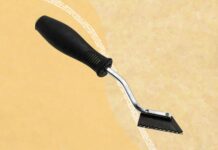
If all this manual labor seems tedious, invest in a handheld sharpener. These devices do the geometry. Insert the scissors into the slots. Pull the blades through. The sharpener adjusts the angle automatically. It’s fast. This is consistent. Works with most household pairs.
Don’t forget to clean the blade after sharpening. Apply a light coat of oil to prevent rust. Your tools will last for years. And cuts will be cleaner.
What happens if the metal eventually gives out? That’s a question for another day. Now let’s pick up a stone.