




Nearly 4,000 people die in U.S. residential fires annually. The majority of these deaths happen while victims are asleep. Smoke is the real killer here. It lulls people into a deep, fatal slumber before the flames even touch them. You might wonder if your walls are actually doing anything to protect you. The answer is complicated. No building material is truly fireproof. Nothing stops fire forever. But some materials buy you time.
Time is the only thing that matters in a fire. It isn’t a question of if a structure will be damaged. It’s a question of when. Fire-resistant materials don’t stop the burn. They just slow it down. That delay gives occupants enough time to escape. It gives firefighters enough time to arrive. That’s why building materials get rated. The rating tells you how long a material can hold its structural integrity under heat. Even heavy timber falls into this category. It burns. It’s combustible. But it chars at a predictable rate. Metals like steel or aluminum don’t burn. They melt. They buckle. They fail catastrophically when the heat gets too high. We need to look at what works. We need to look at what holds up.
The Truth About Flame-Treated Natural Products
When homeowners ask about fire-resistant building materials, they often start with natural options. Wood feels safe. It feels solid. But raw wood burns fast. To fix that, manufacturers use flame treatments. These are chemical processes that alter the surface of the wood. They create a barrier. That barrier slows ignition.
This method is popular for interior finishes. Think paneling. Think decorative beams. You might see it in rustic chic renovations. The wood still has the look of natural timber. It still has the grain. But it won’t ignite as easily as untreated pine or oak.
Here is the catch. Flame treatment is mostly a surface-level defense. It works for small fires. It works for sparks. It does not stop a room from going up in flames if the fuel load is high. You still need smoke detectors. You still need an escape plan. The treated wood just buys you an extra minute or two. That’s enough. Those seconds are the difference between walking out and becoming a statistic.
If you’re planning a renovation, ask your builder about the specific chemicals used in the flame treatment. Some are more durable than others. Heat can degrade the treatment over time. Humidity can too. Don’t just assume “fire-retardant” means “safe forever.” It means “harder to light.” That’s a crucial distinction.
“The key is to construct a building in which a fire would take effect slowly.”
This isn’t about making your house indestructible. It’s about making it survivable. Every layer of protection adds up. Flame-treated wood is just one layer. There are others. We’ll get to them. But first, understand that natural products, when treated right, are a smart starting point for choosing fire-resistant building materials. They blend aesthetics with a basic level of safety. Just don’t let that sense of security make you complacent. Fire doesn’t care how nice your walls look.
You might think using natural stuff means inviting the flames in. Lumber and cotton burn fast. Concrete and plaster do not. But wood doesn’t have to be kindling.
Special chemical treatments change the game. They give these organic materials several minutes of resistance. Treated wood chars on the surface. That char acts as a barrier. It stops the fire from eating through the core immediately.
Builders use this specific lumber for exterior features. Siding, trim, or decks near the structure. Sparks land there. They don’t jump straight to your living room.
Insulation matters too. Cellulose is a strong option. It comes from recycled paper. The material is treated with borate. This chemical makes it far less flammable than raw paper.
Once sprayed into wall cavities, it performs double duty. It blocks heat from a nearby fire. It also keeps warm weather out during summer. It beats fiberglass and cotton in this specific regard.
5: Fire-resistant Glass for Windows
Glass usually shatters under heat. It breaks the seal on your home. Fire-resistant glass is different. It is designed to withstand extreme temperatures.
Standard windows fail quickly. They crack. Flames shoot through. Tempered glass is stronger but not enough for a house fire.
You need specially rated units. They often contain multiple layers. A clear gel or interlayer sits between the panes. Heat activates this layer. It expands and blocks the heat transfer.
This keeps the other side cool. It stops the fire from entering that room. It also prevents thermal shock. The glass doesn’t explode outward into your space.
Installation requires precision. The frames must handle the same heat load. Metal frames can warp. Wood can char. You need matching fire-rated hardware. Hinges and locks matter.
Check the label. Look for the UL rating. Look for the hour rating. One hour means one hour of protection. Two hours is better for garage walls.
It costs more. It is heavier. But it saves lives. It stops smoke inhalation too. Smoke kills more people than flames.
Where to buy? Specialty dealers. Not big box stores. Look for “integrity” and “insulation” ratings. Both matter. Integrity means it holds. Insulation means it blocks heat.
Consider the windows in your hallway. Or near the kitchen. These are escape routes. They need to stay intact.
Do not skimp here. Cheap windows fail. You want the kind that buys you time. Time to get out. Time to call 911.
Some brands offer impact-resistant versions too. Hail protection plus fire safety. Good for storm-prone areas.
Remember to check local codes. Some regions require them in wildfire zones. Others only for garages.
The view might be slightly distorted. The gel can cause minor visual issues. But safety beats aesthetics.
Replace old panes. If you are already renovating, take the opportunity. It is harder to retrofit.
Measure twice. Order custom. These are not off-the-shelf items.
Wait times can be long. Plan ahead.
Is it worth the cost? In a fire zone, yes. In a mild climate, maybe not. But peace of mind has a price.
Windows let in light. They also let in heat.
Before a flame even touches the glass, intense radiant heat can cause it to shatter. Once that barrier is gone, oxygen and fire rush in. It’s not just about direct contact. Heat from an outside fire can ignite curtains or furniture inside without ever touching them.
You need a shield.
Upgrading to Fire-Resistant Glass
Standard glass gives up quickly. Dual-pane windows are a better bet. They don’t just save on heating bills. They double the time it takes for fire to breach the window. The outer pane breaks first. The inner pane holds for a while longer.
Tempered glass is another option. It is heat-treated to be roughly four times stronger than regular glass. It resists the thermal shock better.
If you don’t need a view, look at glass blocks. They are extremely fire-resistant and still let light in.
Wired glass is the top performer for visibility. It is tempered glass with a metal wire mesh inside. You see this in commercial doors that require fire ratings. It’s sturdy. It holds up.
Framing Matters More Than You Think
The glass is only half the battle. The frame keeps everything in place.
Steel frames offer the best protection. They don’t burn. They don’t warp easily.
Wood comes next. It can char, but it holds together longer than you might expect.
Aluminum is okay, but it conducts heat. It can fail if the fire is hot enough.
Vinyl is the worst offender. It melts. It warps. It collapses. If you have vinyl frames in a high-risk area, you are gambling.
Sealing the Gaps
Even solid materials like steel have limits. Steel doesn’t burn, but it can conduct heat to the other side. That heat can weaken connections or ignite adjacent materials.
Flame retardant seals help. You can use foam-based, chemical-based, or cementitious products. These seals expand when heated. They fill gaps. They block oxygen. They buy time.
It’s not magic. It’s physics. But in a fire, physics is all you have.
4: Concrete
Concrete doesn’t burn. That’s the main selling point.
Concrete is the unsung hero of structural integrity. It’s everywhere because it’s strong, cheap, and doesn’t burn. Most homeowners treat it as just a foundation or a driveway, but you’re ignoring its most valuable trait. It resists fire.
Not just “flame retardant.” I mean noncombustible. It has low thermal conductivity. Heat doesn’t move through it quickly. This buys you time. Critical time. If your house catches fire, concrete walls and floors hold their shape long after steel beams have sagged and collapsed. Steel loses strength rapidly at high temperatures. Concrete takes hours to compromise structurally. That’s why engineers pour concrete around steel rebar. It’s armor.
But here’s the catch. Not all concrete is equal.
You can’t just grab any mix and expect it to perform. Concrete is cement plus aggregate. The aggregate is the heavy lifter. It makes up 60 to 80 percent of the volume. The type of rock or sand you use changes everything.
Natural aggregates? They’re risky. When fire hits, moisture trapped inside these stones expands. Steam pressure builds up. The concrete doesn’t just heat up. It spalls. It cracks open and breaks apart after long exposure. This is called sintering, and it destroys the protective shell.
If you’re building a fire-resistant structure, or looking for the best fire-resistant roofing materials, the mix matters. You need aggregates that handle heat without exploding. This is why commercial builds and high-risk zones specify specific mixes. DIYers often skip this detail. They shouldn’t.
The roof is another weak point. Sparks from a wildland fire travel miles. They land on shingles. They ignite. If your roof fails, the house is gone. Concrete roofing tiles or metal decks with concrete overburden are better options. But most homes don’t have them. You have to protect what you have.
Insulating Concrete Forms (ICF) and Modern Solutions
If traditional concrete feels too rigid or labor-intensive, look at Insulating Concrete Forms (ICF). This isn’t new, but it’s becoming the gold standard for resilient housing.
How does it work? Two panels of polystyrene insulation. Concrete is poured between them. The result looks like a concrete sandwich. The insulation stays in place. It becomes part of the wall.
Why does this matter for fire?
- Thermal Mass: The concrete core absorbs heat. It slows down temperature spikes.
- Insulation: The foam doesn’t burn easily. It protects the concrete from rapid heating.
- Structural Integrity: The concrete does the heavy lifting. The foam keeps the temperature stable.
This setup offers climate insulation. It blocks noise. And it resists fire better than standard wood framing or even some steel constructions. It’s quick to build. It’s cost-effective compared to pouring traditional walls.
“ICF provides a great balance of climate insulation, noise blocking and fire resistance.”
You see this in apartments and commercial buildings now. It’s moving to residential. If you’re renovating or building new, ask about ICF walls. They’re not just energy efficient. They’re safety features.
3: Stucco
Stucco gets a bad rap
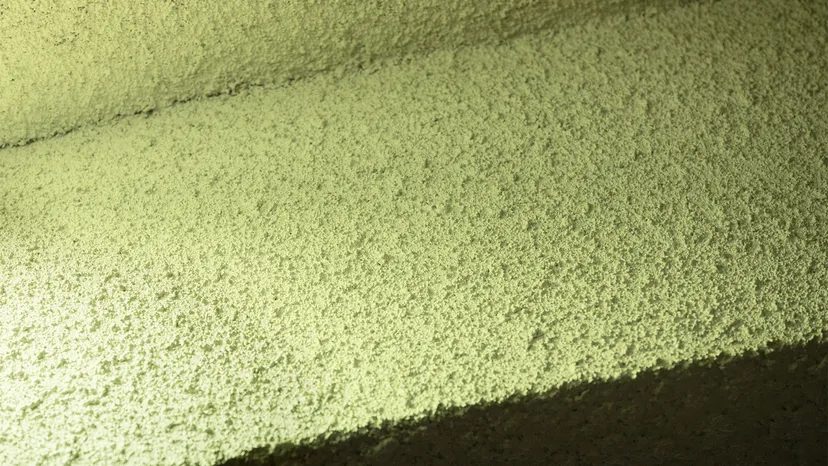
Stucco isn’t just old-fashioned plaster. It’s a heavy-duty shield. For centuries, builders have used it for structure and art. Today, it’s a top choice for homeowners who want durability. Modern stucco mixes Portland cement, sand, and lime. The result is fire-resistant and tough.
It covers almost anything. Brick. Wood. Concrete. The application usually involves two or three coats over metal lath mesh. This layered approach creates a barrier. A single inch of stucco can provide a one-hour fire rating. That means the wall buys you sixty minutes before the flames take hold.
Protecting the Eaves
Roof eaves are weak points. They hang out, catching embers and wind-blown sparks. Box them in. Use stucco to encase the overhangs. It is one of the best materials for this specific job. It seals the gap. It stops the fire from sneaking into the attic.
Design Without Sacrifice
Fire resistance doesn’t mean ugly. Stucco offers texture and color options. You can match any style. Prairie School. Mediterranean. Tudor. Southwestern. The finish adapts to the architecture. You get safety and curb appeal in one step.
2: Gypsum
Gypsum board is the standard for interior walls. But not all gypsum board is equal. When you are looking for fire-resistant drywall, the stakes change. Standard drywall burns. Fire-rated drywall fights back.
How Fire-Resistant Drywall Works
The secret is in the core. Regular gypsum board has a paper facing and a soft core. Fire-resistant versions use glass fibers and special additives. These ingredients help the board hold up under heat. They prevent the wall from collapsing quickly.
Where to Install It
You don’t need it everywhere. Focus on high-risk areas. Garages. Laundry rooms. Furnace rooms. Any space with a water heater or dryer vent needs protection. The International Residential Code (IRC) often mandates Type X drywall in these zones. Check your local codes. They vary by state and municipality.
Installation Tips for DIYers
Cutting fire-rated drywall is messy. The additives make it heavier and grittier. Use a sharp utility knife. Score it deeply. Snap it. You’ll get more dust than usual. Wear a mask.
Taping and mudding require patience. The surface is tougher to smooth out. Use a high-quality setting-type joint compound. It sets fast and hard. Standard ready-mix mud might shrink or crack over the new material.
Thickness Matters
Fire resistance is measured in hours. The thicker the board, the longer the rating.
– 1/2-inch Type X gives a 30-minute rating.
– 5/8-inch Type X gives a 60-minute rating.
– 1-inch specialized panels can go up to 2 hours.
For a garage wall shared with the living space, 5/8-inch is the standard. It’s heavier. You might need extra support in the studs if you are retrofitting. But the delay it provides to firefighters is worth the extra lift.
The Paper Factor
The facing on fire-resistant drywall is often treated. It resists moisture
When you are looking at structural materials, fire resistance isn’t just a nice-to-have. It is often a requirement. Many structural systems need underlying gypsum sheathing to hit a good fire-resistant rating. Inside the home, gypsum board is the standard for interior finishes that resist fire.
You know it as drywall. It is simple in theory. A layer of gypsum sits between two sheets of paper. But the chemistry inside that wall cavity does the heavy lifting. Type X gypsum board is not your standard hardware store pick. It gets a special treatment. Additives are mixed in to boost its fire-resistive qualities.
The paper on the outside of Type X board burns slowly. It does not feed the fire. It stays put. Meanwhile, the core is noncombustible. It holds chemically combined water in the form of calcium sulfate. When flames hit, that water turns to steam. The steam blocks heat transfer. The fire cannot jump through easily.
Even after the water is gone, the core holds the line. It resists penetration for a while. Builders know this. They stack multiple layers of gypsum board to increase the rating. Thicker walls mean more time. More time means a better chance of survival.
Brick as a Structural Fire Barrier
Brick is not just for facades. It is a dense, heavy material that does not burn. It has a high thermal mass. This means it absorbs heat slowly. When fire hits brick, the temperature rise inside the wall is gradual. The brick acts as a buffer. It buys time for the structure behind it.
Using brick in conjunction with gypsum sheathing creates a layered defense. The brick handles the initial blast of heat. The gypsum sheathing behind it protects the structural wood or steel. This combination is common in garages and firewalls between attached homes.
Safety and Installation Considerations
Installing Type X board requires care. The additives make it denser. Heavier. You need standard drywall tools but stronger support. Use 6-inch screws. Space them every 12 inches on walls and every 8 inches on ceilings. Tighter spacing helps the board stay flat and resist warping under heat.
Tape the joints. Mud them flat. A smooth surface helps the finish look good, but more importantly, it ensures there are no gaps. Gaps are weak points. Fire loves weak points. It will find the crack. It will travel through the void.
Always check local building codes. The requirements vary by region. Some areas demand two layers of 5/8-inch Type X on garage ceilings. Others might require it on shared walls. Ignoring these rules is not just risky. It is illegal. And it puts your home at risk.
Why Layering Works
Single-layer drywall has limits. Two layers break that limit. The gap between layers, if any, disrupts heat flow. The total mass increases. The time to failure extends. This is why multi-layer assemblies are specified in high-risk areas.
It is not just about the board. It is about the system. The screws hold the layers together. The tape seals the seams. The paint or texture adds a final barrier. Every component matters.
Homeowners often ask if they can skip Type X for cost savings. The answer is no. Not where it
The Brick Wall Reality Check
If the fable of the Three Little Pigs taught us anything, it’s that solid masonry beats wood shavings every time. And in a real-world scenario, that advice holds up. Brick doesn’t just stop a wolf. It stops a spark.
Bricks are born in kilns. They’ve already seen fire. That makes them inherently tough. But here’s the catch. A single brick is tougher than a whole wall. Why? Mortar. The stuff holding the bricks together is the weak link. It crumbles faster than the stone itself.
Even with that weak point, brick remains a top-tier choice for fire protection. How long does it last? It depends on thickness and construction. You’re looking at a one-hour to four-hour fire-resistance rating for standard walls. That buys you serious time.
The Trade-Offs
Nothing is perfect. Brick comes with baggage.
It’s heavy. Your foundation needs to handle the load. It’s expensive. Labor and material costs add up fast. And it’s a thermal bridge. Brick doesn’t insulate well. You’ll need supportive insulation materials to keep your energy bills from spiraling out of control.
So, why choose it? Cost. Ease of installation. Climate. Builders weigh these factors against the safety benefit. It’s a balance.
Fire-Resistant FAQ
Is cement board fire-resistant?
Yes. Cement board passes required testing. Fiber cement boards are noncombustible. They work well with other noncombustible materials in construction.
What does fire-resistant actually mean?
It’s the ability to delay or stop excessive heat and flame passage. No material is truly fireproof. But fire-resistant materials burn slower. Much slower.
Which materials are fire-resistant?
Glass windows rated for fire, concrete, gypsum, stucco, and brick. These are the heavy hitters.
What is a fire-resistance rating?
It’s a timeline. How long until fire damages the structure? How combustible is the material? The rating measures both.
What is the most common fire-resistant interior wall material?
Gypsum board. Also known as drywall. Type X gypsum board has additives. These improve fire resistance. It’s the popular choice for a reason.