



That feeling is familiar. You’ve plated the meal. The plates are clean. The wine is poured. Yet, something feels flat. The table lacks that specific spark that turns a meal into an event. In the dead of winter, when the thermostat drops and you want to stay indoors, you try everything. You swap lightbulbs for warmer tones. You light candles. You add soft throws. But you keep overlooking the single most impactful element in the room. It’s the linen.
Stop using wrinkled linen. Forget the standard cotton that plays it safe. There is a fabric that has lived in the privacy of our bedrooms for decades. Now, it is making a loud entrance into the dining room for early 2026. Designers are obsessed with it. It adds immediate depth. It creates a cozy vibe without requiring you to buy new furniture.
The star material? Velvet.
It used to be the heavy curtain fabric. It was the plush comfort of a headboard. Now, in January 2026, velur is moving from the bedroom to become the essential texture for reception tables. It breaks the rules of slow living decor. Why now? We crave tactile comfort. Cold, smooth napkins feel distant. Velvet feels like a hug. Resting your arms on a velvet tablecloth during dinner provides a sense of envelopment. It is warm. It is soft.
Is it too much? No. If you choose the right shade. Forget the bright red that screams 1970s theater. Look for muted, natural tones. Deep forest greens. Burnt ochres. Night blues. Nude shades. Terracotta. These colors warm the space visually without suffocating it. It offers accessible luxury. It keeps things raw and authentic.
How to Balance Velvet on Your Dining Table
Using velvet on a dining table requires skill. Get it wrong, and it looks theatrical. It looks heavy. The secret lies in balancing and contrasting materials.
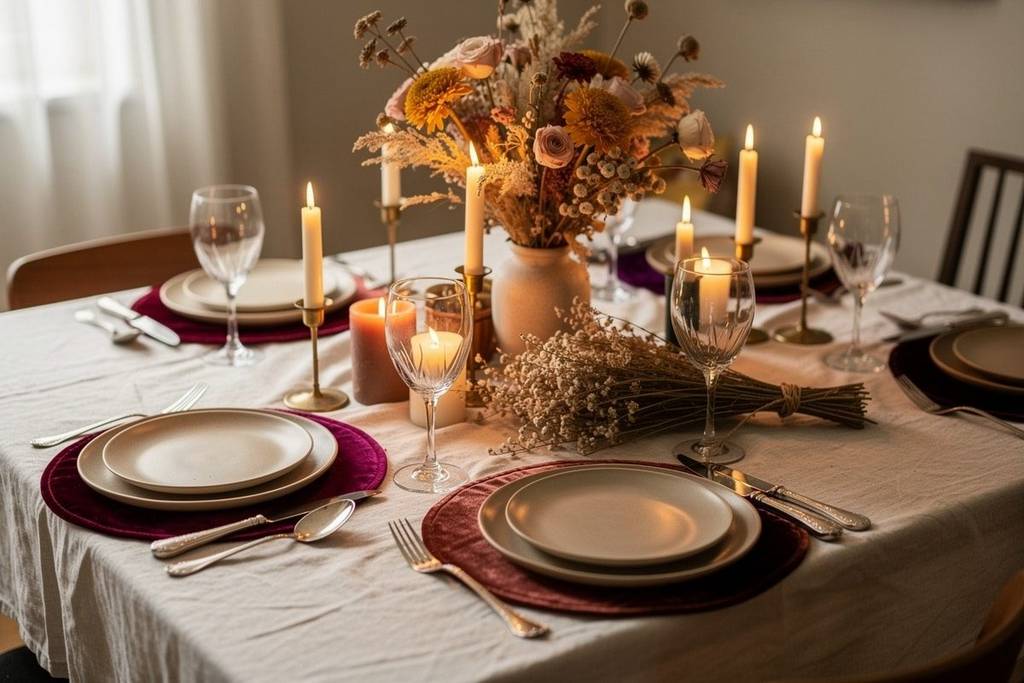
If you choose a full velvet tablecloth, you must calm the rest of the setting. Simplicity is key here. Pair the richness of the fabric with raw ceramic ware. Thick stoneware works well. Choose plates with organic, irregular shapes. The matte finish of artisanal pottery creates the mix-and-match style people love.
Avoid ornate silverware. It clashes. Go for clean lines. Brushed gold cutlery. Matte black handles. These elements modernize the whole look. They keep it sharp.
Hesitant to cover the whole table? Try a velvet runner. Place it on raw wood. Lay it over a white linen cloth. It creates a textured line that looks elegant. You can also play with small details. Simple velvet ribbons tied around cotton napkins add sophistication. It is a low-cost trick. You can follow the trend without replacing your entire linen collection.
Why Velvet Captures Light and Warmth
What makes velvet fascinating in interior design, especially on a table, is its unique ability to interact with light. Cotton absorbs light evenly. Velvet captures it. It reflects it. The shades change depending on the angle of the fibers. In the evening, by candlelight or under a dim pendant, your table comes alive. It gains relief.
This material creates a muted atmosphere, perfect for confidences and long winter meals. In 2026, the trend is about creating wellness bubbles at home. Velvet helps build that chic cocoon vibe. It also absorbs sound slightly. It reduces the clatter of cutlery. It makes the acoustics of the room more pleasant.
To finish the scene, avoid the “total look” trap. Do not match everything. Use one or two velvet cushions on a bench. Drape a chair with the fabric. This creates visual harmony with your table. The goal is to build a coherent universe where you feel good immediately. You are protected from the cold outside by noble, comforting materials.
Owning the dining room with velvet means accepting to play with classic codes. It gives them a warm modernity. It turns setting the table from a chore into a creative act. Are you ready to transform your table with the shimmering softness of velvet for your next dinner? The winter nights are long. Make them count.