


It is hot. The thermometer is climbing, and your vegetable garden is sweating.
French gardeners are watching their prized crops suffer under the relentless summer sun. Among the first casualties, the tomato takes the front seat. You might notice a sudden, alarming discoloration on the fruit. It looks like a complex disease. Or a sneaky pest.
If your tomatoes are turning white in the middle of a heatwave, stop searching for a pathogen. The culprit is not a bug or a fungus. It is a mistake in how you manage your plants.
The Irreversible Damage of Solar Burn on Tomatoes
When temperatures spike, plants struggle to regulate their internal temperature. They transpire to cool down. But sometimes, they lose the battle.
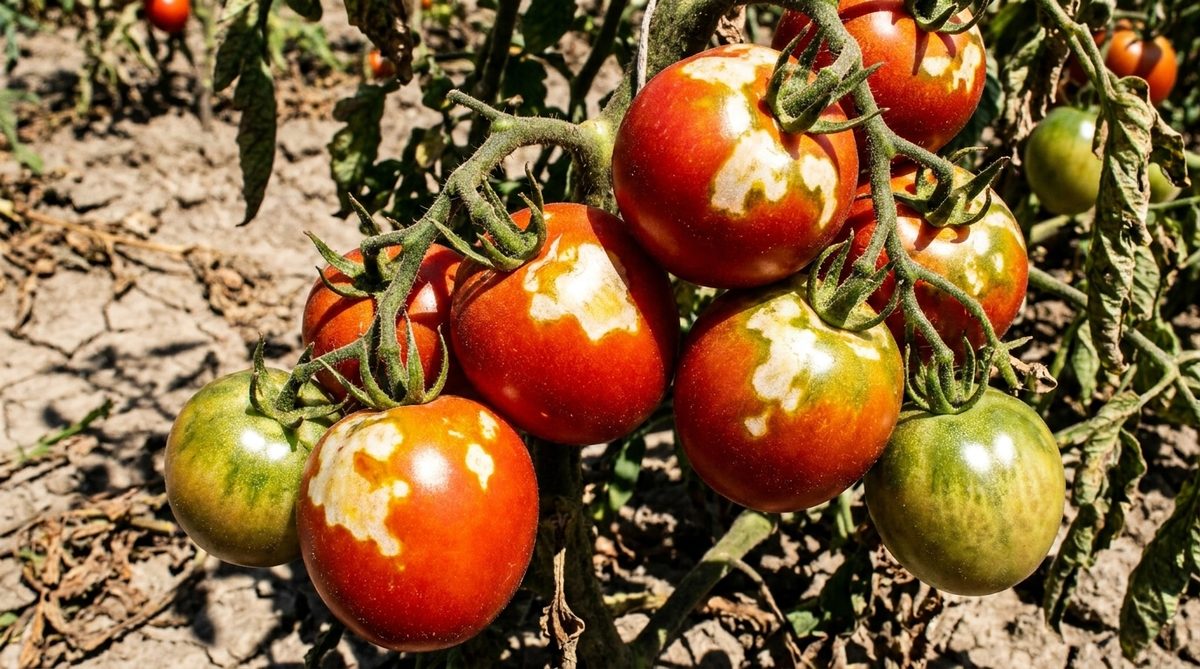
The fruit, once promised to be juicy and red, develops pale, intense, parchment-like patches. This is solar burn on tomatoes. It happens when light intensity exceeds the plant’s tolerance. The UV rays literally cook the cell tissues of the fruit.
Here is the hard truth: a burned tomato does not recover. These white or yellowish spots are permanent marks. The damaged area will eventually turn brown. It will collapse. It becomes an open door for rot.
The Maintenance Error That Leaves Plants Vulnerable
You want to fix it. You look for the cause.
The error usually comes from a common maintenance gesture. You likely had good intentions. But you did it at the wrong time.
To speed up ripening or to prevent humidity-related fungi, many gardeners prune aggressively. You strip the leaves. You remove the foliage. This practice, known as heavy defoliation, removes the plant’s natural shield.
Without that leafy canopy, the fragile fruit is suddenly exposed to the zenithal sun. It is a brutal exposure. That is what you regret when the heatwave truly sets in.
Why Shade Beats Pruning Every Time
Prevention is your only ally now. You need to save the season’s work.
Keeping abundant foliage acts as a natural parasol. It is essential during intense heat. Do not cut it down.
You can also use physical barriers. Install a shade cloth or a light mesh. These are standard items at any garden center. They filter the light without stifling growth.
For the DIY crowd, there is a zero-cost option. Use wooden crates. Place them vertically near vulnerable plants. They create temporary shade. It is simple. It works.
Anticipation beats hasty pruning. Always.
Preserving your summer harvest requires observation. It requires restraint with the secateur. Heatwaves force you to adapt. You must offer a climate refuge for your vegetables.
Are you ready to rethink your garden approach before the sun strikes again?