


The afternoon sun doesn’t just warm your terrace. It attacks it. Masonry walls absorb heat like sponges, holding it through the day and radiating it back out long after the sun has dipped below the horizon. The result is a stifling, heavy air that makes the outdoors feel like an oven.
You’ve probably seen your neighbor slapping white mix onto their exterior walls. It looks like a simple cleanup job. It’s not. It’s a strategic move to lower ambient temperatures. The goal is a complete thermal shield. This approach blends ancient techniques with clever, accessible installations to keep you from sweating through your clothes.
The Science Behind White Walls and Waterproofing
The first line of defense is albedo, or reflectivity. Dark plasters and exposed bricks can absorb up to 90% of solar radiation. That turns your patio into a skillet.
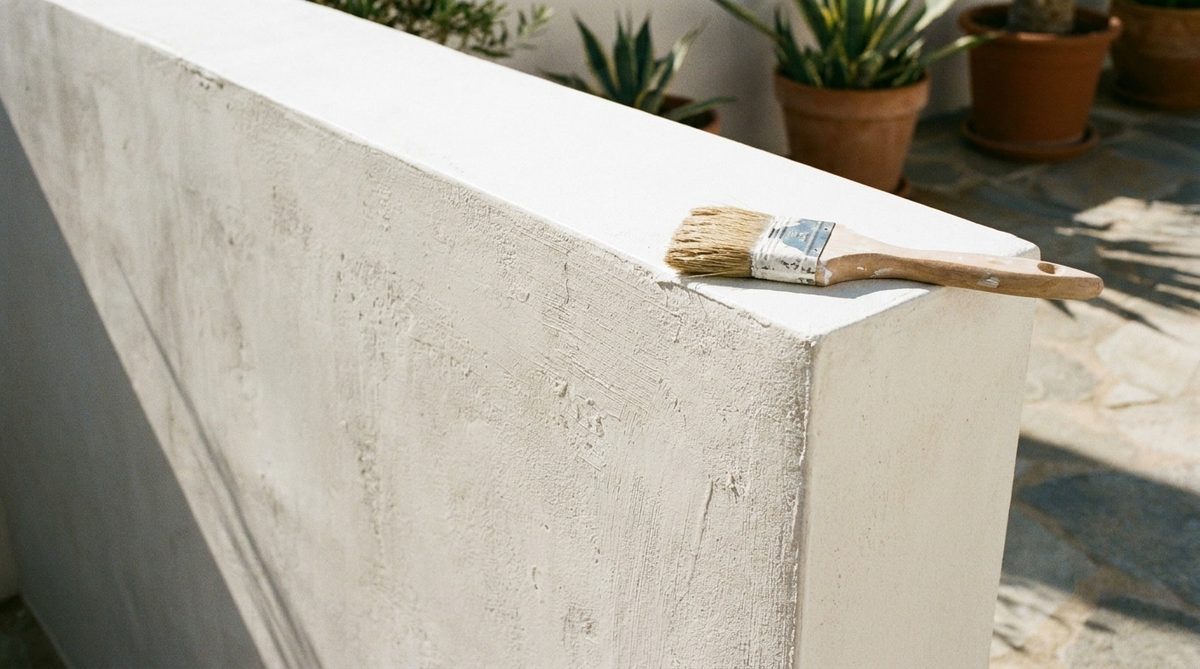
Switch to a light-colored coating. Specifically, lime. It’s cheap. It’s natural. And it reflects massive amounts of UV rays back into the sky.
Lime isn’t just paint. It’s a living material. It lets the wall breathe while providing a tough protective barrier. It adapts to summer heat without cracking or peeling.
But lime alone isn’t enough. You need waterproofing for exterior walls. Rain splashes and night humidity will soak into porous masonry. Without protection, the wall holds that moisture and stays cold and damp in the wrong ways, or worse, cracks as it freezes and thaws.
An exterior hydrofuge creates an invisible film. It stops liquid water from penetrating but allows internal water vapor to escape. Apply it with a roller or sprayer on clean walls. You can do it before or after the lime treatment, depending on the product specs. The result is a healthy, bright, and heat-resistant envelope.
To mix an effective lime wash yourself, you need:
- 1 part aerial lime powder
- 2 to 3 parts clean water
- 100 grams of alum salt (to fix the mixture)
- A few drops of linseed oil (for flexibility)
Green Trellises and Mist Walls for Instant Cooling
Whitewashing is a great start. But if you want real relief, borrow from bioclimatic design.
Install a vegetated trellis. This adds direct shade to the masonry structure. Fix pressure-treated wood panels or stainless steel cables a few inches from the freshly painted facade. That gap allows air to circulate.
Climbing plants like ivy, star jasmine, or passionflower will colonize the structure. The dense foliage blocks UV rays before they even hit the wall. It’s a simple DIY project. You’ll need a good drill, exterior-grade anchors, and patience to guide the shoots.
To take it further, add a wall misting system. This creates an oasis-like microclimate.
The principle is evapotranspiration. Attach a thin hose with misting nozzles along the top of the trellis. It releases microscopic water droplets into the air.
Here’s the trick. Those droplets evaporate instantly upon hitting the hot air. This phase change from liquid to gas absorbs calories from the environment. You can drop the perceived temperature by 5 to 10 degrees in minutes.
Hide the tubing behind the leaves. Connect it to your garden water supply. It’s accessible even for beginners.
“The ingenuity of the system lies in the fact that these tiny droplets evaporate instantly upon contact with hot air.”
This isn’t just about comfort. It’s about reclaiming your outdoor space during the hottest months. You’re not just painting a wall. You’re building a buffer against the heat. The lime reflects the worst of the sun. The trellis casts shade. The mist steals the heat.
Combine them. The result is a terrace you can actually use when the mercury spikes. The wall stays cool. The air moves. You sit outside without checking your watch every five minutes to see if the sun has finally set.
It requires some prep work. Some mixing. Some drilling. But the payoff is immediate. You stop fighting the climate. You start working with it. And once you feel that drop in temperature, you’ll wonder why you didn’t do it sooner.
Blocking the sun to stop the heat
If you want your terrace to actually be livable in August, you can’t rely on luck. You need a plan. The chauling and plants do their job, sure. But they need help. Specifically, they need shade. And not just any shade. You need strategic shade that cuts the sun before it hits your skin.
Set up triangular or rectangular shade sails. Stretch them tight from your house wall out to free-standing masts. This blocks the direct overhead sun. Don’t just tie them to a wooden deck. Use chemical anchors to bolt mounting rings directly into your masonry. That’s the only way to survive the sudden summer gusts. Without that anchor, your shade sail becomes a dangerous kite.
This setup does more than just block light. It stops your floor from turning into a griddle. Hot ground radiates heat back up. Shade stops that loop. It keeps the ambient temperature down.
Insulating the south-facing wall
Sometimes shade isn’t enough. If your south-facing wall has no thermal mass, it will soak up heat all day. That heat eventually migrates inside. You need to break that cycle.
Consider adding insulation to the exterior. It sounds like a big job. It doesn’t have to be. You can attach expanded cork or wood fiber panels directly to the outside wall. These materials breathe. They don’t trap moisture like foam might. They also pair perfectly with lime plaster finishes.
Apply a light-colored finish over the insulation. Light colors reflect sunlight. Dark walls absorb it. Combine that with the breathable insulation, the lime wash, and the shade sails, and you’ve created a barrier. The heat stays out. The cool air stays in.
Mixing old and new materials
There is no single miracle cure for summer heat. It’s a system. You combine traditional methods with modern materials. You insulate. You shade. You reflect.
Is it worth the effort? Look at a July afternoon. Look at a sweltering, unusable patio. Then look at the tools you need. A drill. Some anchors. A few panels of cork or fiber. Lime paint.
Why wait for the next heatwave to realize you have no control over your outdoor space? Grab a drill this weekend. Start with the paint. Then move to the shade. The steps are logical. The payoff is survival.
You’ll be sitting there in late August. The sun will be low. The air will be cool. You won’t know how you did it. You’ll just be glad you started.