

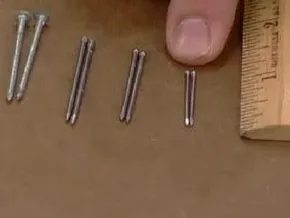
You don’t think about nails until the roof leaks. Then you realize you picked the wrong ones.
Roofing nails aren’t generic hardware store items. They are specialized fasteners designed to hold heavy materials against high winds and rain. If you are installing asphalt shingles, you need wide, flat heads to cover the hole. You need short shanks to avoid poking through the underside. And you need sharp tips to drive through without cracking the shingles or splitting the wood deck.
Get it wrong and water gets in. Get it right and the job lasts decades.
Match Material to Environment
Not all nails are created equal. The material you choose depends on your climate and what you are attaching.
Aluminum nails work well for metal roofs and standard shingles. They resist corrosion naturally. But they are soft. If you live near industrial areas or coastlines, skip them. Salt and chemicals will eat aluminum nails alive.
Stainless steel roofing nails are the heavy lifters. Use them in coastal zones. They handle salt air without rusting. They are also the best choice for fastening heavy tiles and slate. Heavier materials need heavier nails.
Copper nails are another option for standard roofing. They are durable and look good. They work well if you want a traditional look with long-term performance.
Galvanized roofing nails are steel cores coated in zinc. This coating fights rust. They are the go-to for asphalt shingles in most inland areas. They hold up better than plain steel and cost less than stainless steel.
Size Matters: Shank and Length
Classification by size is just as important as material. Standard lengths run from 1 to 2 inches. You can find nails up to 6 inches long for specialized uses. But the shank type changes how the nail performs.
- Smooth shank nails : These are the standard. They are cheap and common. Usually made of aluminum, stainless steel, or copper. They are not the strongest option. They can pull out over time if the wind is strong enough.
- Ring shank nails : These have ridges along the shank. The ridges grip the wood like a screw. They usually have larger heads. Made of galvanized steel, they are strong. Use them in areas with high winds. They resist pull-out far better than smooth shanks.
- Screw shank nails : These are twisted. They have sharp diamond tips. They are designed for wood roofs. They fasten securely by biting into the wood fibers.
Which Nails for Your Shingles?
You need to match the nail length to the thickness of your roofing material.
For asphalt or fiberglass shingles, use 1-inch (2.5 cm) nails. This is the standard. It penetrates the shingle and bites into the roof deck without going too far through.
For wood shingles, you need longer nails. Wood shingles are thicker. A 1-inch nail might not penetrate deep enough to hold securely. Check the thickness. Add length accordingly.
Thicker materials demand longer penetration. If the nail doesn’t grip the structural sheathing, the wind will win.
Why This Choice Is Critical
Most DIYers rush this step. They grab a box of generic nails. That is a