


Squirrels. Mold. Rot. These are the silent invaders waiting in the dark corners of your roofline. Most homeowners ignore them until the damage is done. But there is a barrier standing between your attic and those pests. It is called a soffit.
It is not just a piece of trim. It is a functional shield.
While it helps your home look finished, its job is protection. It blocks water, keeps air moving, and stops animals from nesting in your rafters. Not every house has one. But if yours does, it is likely the most important part of your attic’s immune system.
What Exactly Is a Soffit?
Technically, a soffit is any surface underneath an architectural element. You might see them under stairs or ceilings inside your house. We are talking about the exterior kind.
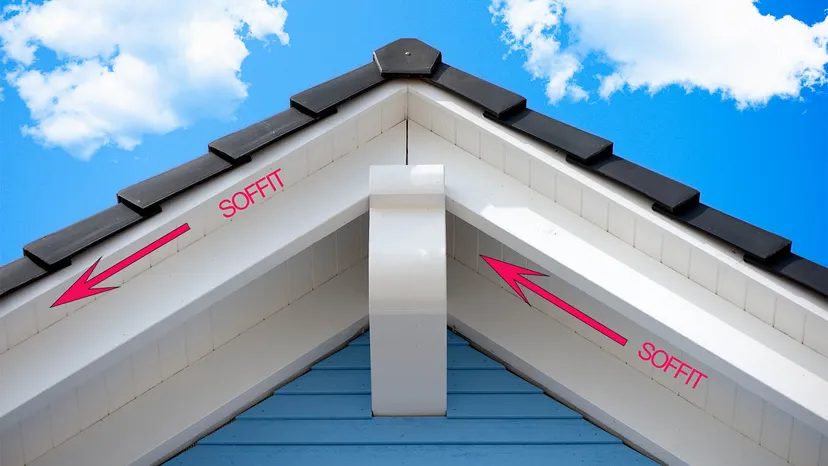
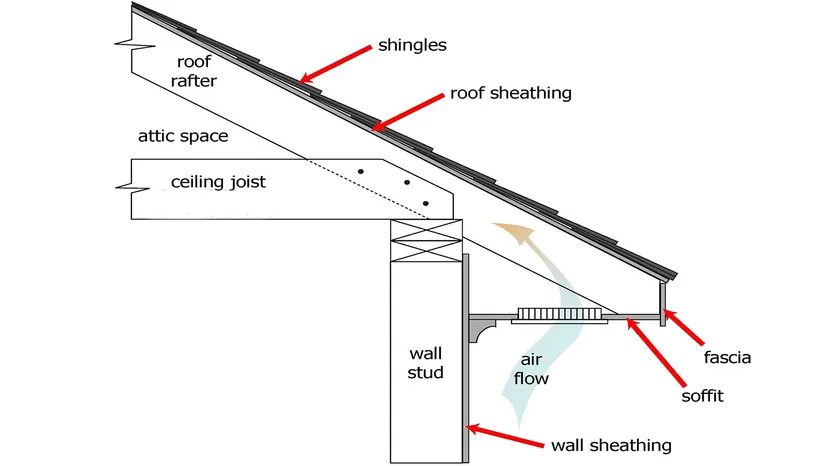
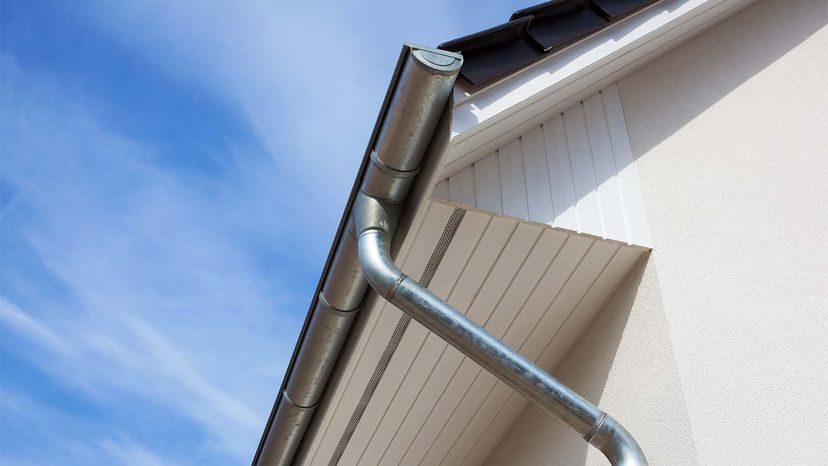
The exterior soffit lives on the underside of the eave. The eave is the part of the roof that sticks out past your siding. It protects the walls from rain splash. That overhang has two main parts.
Fascia. This is the vertical board at the very edge. Your gutters attach to this.
Soffit. This is the horizontal paneling underneath. It encloses the gap between the roof and the wall.
“Traditional attics are unconditioned and uninsulated, requiring air circulation so they don’t overheat during the summer or trap cold moist air during the winter,” says Justin Larrison, a remodeling consultant in Atlanta.
This ventilation cycle is not optional. It is physics. Hot air rises. Without a clear path for that air to enter, your attic cooks.
Why Your Home Needs Vented Soffits
You need fresh air in your attic space. Even in winter.
In summer, the sun bakes your roof shingles. That heat gets trapped under the tiles. If the air cannot escape, the shingles crack and curl. You lose money on cooling bills because the attic radiates heat into your living space.
In winter, moisture is the enemy. Your family breathes. You shower. You cook. That moisture rises into the attic. If it gets trapped, it condenses on cold rafters.
“Overheating can shorten the life span of materials, mainly roof shingles and add to energy costs, while trapped moisture creates a breeding ground for the dreaded ‘M’ word: mold.”
This is where soffit ventilation saves you.
The system works like a lung. Air enters through vents in the soffit. It moves up through the attic space. It exits through ridge vents at the peak of the roof or through gable vents. This constant flow keeps the wood dry and the temperature stable.
It also keeps bugs out. Bees, wasps, and birds look for dark, quiet spaces. A solid soffit with tight mesh screening blocks them. A hole in your soffit is an open invitation.
Do You Actually Have Soffits?
Not all homes use them.
Older homes sometimes feature “open rafter” eaves. You can see the wooden beams sticking out. No panels. No soffit. In these cases, the rafters themselves provide the structure, but there is no enclosed space to ventilate in the same way.
Some modern homes have roofs that do not extend past the walls. No overhang. No place for a soffit.
But most standard homes do.
To check your house, walk to the street. Look up at the roofline. Can you see the underside of the eave? Can you see the wood rafters sticking out?
If you see the underside but not the rafters, you have a soffit. It is likely made of wood planks, vinyl, or aluminum. It is painted to match your trim.
If you see the rafters clearly, you might have exposed eaves.
If you have insulated attic floors and sealed your attic space properly, you might rely on gable vents instead. These look like louvered shutters on the triangular wall of your attic. But if you have a traditional, unconditioned attic, you need that intake air. The soffit provides it.
Signs Your Soffit Is Failing
Soffits degrade. Moisture creeps in. Bugs chew through wood. Wind knocks panels loose.
You do not want to wait for a collapse. Watch for these signs.
- Peeling paint. If the finish on your soffit is bubbling, water is behind it.
- Visible gaps. Check the joints between panels. Gaps let in wind-driven rain and pests.
- Water stains. Look at your ceiling inside the attic. Dark spots mean the barrier has failed.
- Squeaking or chirping. If you hear noises in the walls or ceiling, something is nesting. It could be in the soffit cavity.
Replacement is not just cosmetic. It is structural maintenance.
Materials and Tools for DIY Repair
If you spot damage, you can fix it. But you need the right materials.
Wood soffits are traditional. They can be painted. But they rot. They need regular upkeep.
Vinyl is popular. It is cheap. It comes in pre-cut panels. It snaps together. It does not rot. But it can become brittle in extreme cold.
Aluminum is durable. It resists rust. It is lightweight. But it dents easily if you drop a tool on it.
Composite materials are newer. They mimic wood grain. They do not rot. They are more expensive.
For a typical DIY repair, you will need:
- Utility knife
- Tin snips (for metal)
- Hammer
- Nail gun or screws
- Measuring tape
- Safety glasses
- Ladder (in good condition)
- Mesh screening (to block insects)
Cutting panels requires precision. Measure twice. Cut once. Vinyl expands and contracts with temperature changes. Leave a small gap between panels for movement. If you nail them tight, they will warp.
Safety first. Ladders slip. Roofs are steep. Never work alone if you can help it. Have someone hold the ladder. Wear non-slip shoes.
The Next Step
Most homeowners treat the roofline as an afterthought. They look at the shingles. They check the gutters. They forget the space
Breakdown of Common Soffit Materials
You’ve got options when it comes to the stuff hiding under your roofline. Historically, wood was the go-to. Think simple planks, wainscot styles, or those classic beaded looks. Qualityedge.com notes that these traditional designs still have their place, but the market has shifted.
Now, aluminum and vinyl dominate most neighborhoods. They might copy the aesthetic of stained timber, but they bring serious durability to the table. And here is the kicker: they can be vented. That ventilation matters. It lets air flow, which keeps your attic from turning into a sauna.
Wood isn’t dead, though. If you want that grain texture, you can still get it. But you are looking at maintenance. Vinyl offers a low-maintenance alternative. You stain wood every few years. You wash vinyl once in a while. The choice depends on how much time you want to spend on a ladder.
“Not every home is the same and soffits are no different,” says Larrison. “Materials can range from beautifully stained wood to low-maintenance vinyl.”
The design space is wide open. Colors coordinate with your siding or trim. But function drives the decision more than aesthetics. You can go open. Vented. Fully enclosed. Or custom-tailored to whatever weather hits your zip code hardest.
If you live in a storm-prone area, there are soffit options built to take a hit. Standard vinyl might dent. Heavy-gauge aluminum won’t. It comes down to what your local climate demands and how long you want the repair to last.
Annual Inspection Rituals
Larrison doesn’t mess around with half-measures. He says check your soffits every single year. Treat them like the rest of the roofing system because they are part of the same structural family. Roof trusses and open eaves need that same yearly stare-down. It’s about structural integrity. You can’t just ignore the edges.
What are you actually looking for?
“Peeling paint, separation between materials, and mildew or mold spots are typically the first signs that the soffit or eave need maintenance or repairs,” says Larrison.
If you see paint lifting, stop. If you see gaps opening up between panels, stop. Mold isn’t just ugly. It’s a symptom of moisture problems. Catching these early saves your wallet later.
Cleaning Without Damage
Clogged vents are a silent killer for soffits. MHC Gutters points out that you can blast dirt and debris out of vented soffits using compressed air. Keep it clear. Airflow matters. If the air can’t move, moisture gets trapped. Rot follows.
But what about the surface itself?
Insect nests love hiding in eaves. Clear them out. Wash the surface with a mild detergent. Don’t use harsh chemicals that strip the protective coating. You want to clean, not damage. If the paint is peeling, reseal it. Repaint if necessary. A sealed soffit is a happy soffit.
Keep gutters clean too. Debris in the gutter backs up into the fascia and soffit. It’s a direct line of damage.
Why DIY Education Matters
Larrison insists on one thing above all else: education. Homeowners need to know their specific situation. Not every house is the same. Some have aluminum. Some have vinyl. Some have wood. Each material reacts differently to weather and time.
“All homeowners should take some time to educate themselves on their home, so they know what their specific situation is, how to maintain, and what signs to look for when something isn’t working correctly,” says Larrison.
The internet is full of noise. But it’s also full of answers. Investing time now to learn how your home works pays off in stress reduction and cash savings later. You don’t need a degree in architecture. Just basic knowledge of what to look for.
Peeling paint? Address it.
Mold? Treat it.
Blocked vents? Clear them.
It’s that simple. Or it should be.
A Quick History Lesson
Soffits aren’t new technology. The word itself has a history. First used in 1592. The roots go back through French and Italian to Vulgar Latin. It literally means “to fasten underneath.”
Merriam-Webster confirms this. So when you’re looking up at the underside of your roof overhang, remember you’re looking at something with deep roots. The function hasn’t changed much. Just the materials. And the maintenance needs.
You’re not just cleaning a panel. You’re maintaining a system. One that protects your attic, your insulation, and your structural bones. Pay attention.