





The overflowing hamper. It is the silent enemy of every household. From college roommates to large families, a few days of busyness turns the bathroom into a battlefield. Orphaned socks. Crumpled towels. A pile of t-shirts that seems to grow on its own.
It feels endless.
But there is a fix. It does not require expensive gadgets. It does not cost a fortune. It requires a visual system. One that makes sorting laundry automatic. You can keep clean clothes ready and start machines without panic. Forget the mountain. Here is how to take back control.
Set Up Smart Bins at the Bathroom Entrance
The battle against laundry chaos starts before you even hit the washer. It starts with where you drop dirty clothes. Do not hide bins in a basement or a cluttered closet. Install them at the bathroom entrance.
Make it as easy to drop clothes in as it is to brush your teeth.
Choose a visible, attractive spot.
Align bins along a wall. Use a forgotten corner. Hang baskets to save floor space. The goal is visibility. If you see it, you will use it. This approach mirrors the “zen” order of Scandinavian homes. Every object has a place.
Aesthetics matter more than you think. A wicker basket looks inviting. A plastic tub in a dark corner looks like a chore. French decor brands offer many options in natural fibers, recycled plastic, or fabric. Pick one that fits your style. An attractive bin encourages triage. It keeps the space serene.
Match bin count to your household size.
This is where logic meets convenience. For a couple? Two or three small bins. Enough for daily wear.
For a larger family? You need more capacity. Plan for one bin per color or category. Use larger containers.
How many bins do you actually need? Most families of four wash four to five loads a week. Three to five bins strike the right balance.
The main advantage? No overflow. When a bin is full, it tells you when to wash. No more guessing. No more procrastinating. You know exactly when the next load is due. It reduces the mental load significantly.
Use visual cues for instant recognition.
Most people struggle with sorting because it is hard to see the difference quickly. Color coding solves this.
Assign a color to each bin.
– Blue for darks.
– White for lights.
– Pink for delicates.
This works wonders with children. They do not need to read labels. They just look and drop.
Add personalized labels or pictograms. Socks here. Tees there. Sheets in another. This method borrows from dorms and sports clubs. Daily laundry sorting becomes a game. It builds a ritual.
Eventually, you stop thinking. You just sort.
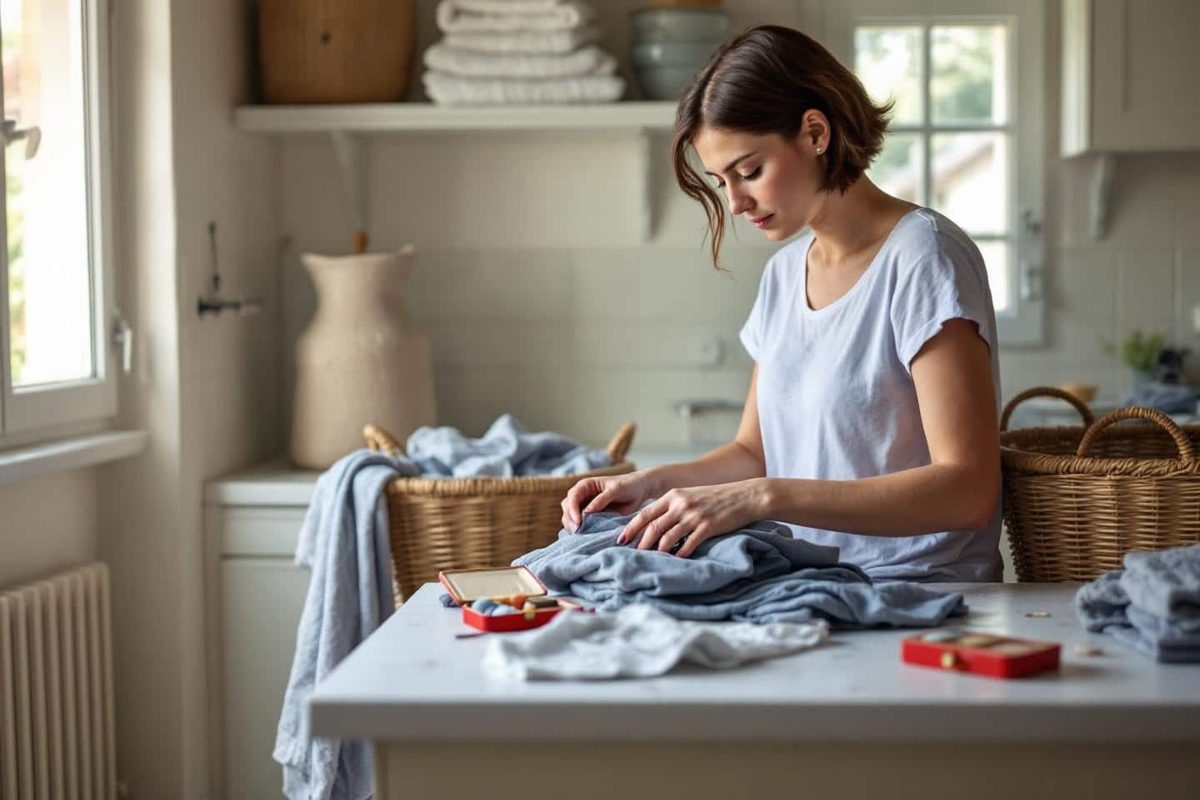
Separate whites, colors, and delicates to stop dye disasters
We inherited the idea of “whites only” from our ancestors, but our closets today are a chaotic mix of brights, darks, and fragile fabrics. Trying to sort them all at the last minute is a recipe for a red sock in a white load. The fix isn’t complex. It’s physical separation.
You need three bins. One for whites. One for colors. One for delicates—silk, wool, underwear. Place them side-by-side. When you pull off a shirt, you don’t think. You look. You drop it. Done. No mental load. No second-guessing. This simple visual cue protects your textiles from fading and bleeding. It’s basic physics. Red dye bleeds into white cotton unless it’s kept separate. Do the work once, at the source.
Get the family involved with clear visual cues
Kids don’t listen to lectures. They follow patterns. If the bins are color-coded and obvious, even a toddler can participate. Blue bin for blue jeans. Pink for pastels. Mesh bag for delicates.
This isn’t just about efficiency. It’s about shifting the mental weight. For generations, laundry was a communal act. Now, it’s often a solitary chore done in isolation. Reclaiming that shared responsibility reduces resentment. When everyone has a designated drop zone, no one is left scrubbing stains or sorting socks at 11 PM. The system does the heavy lifting.
Wash only what is necessary to save energy
Most people run their machines on autopilot. Half-full loads. Daily cycles for items that aren’t dirty. Stop.
The bin system creates a natural threshold. You don’t wash until a bin is full. This forces intentionality. You wait. You accumulate. Then you wash. The result? Fewer cycles. Less water. Less electricity.
Think about the cost savings. A full load is more efficient than three partials. But it’s also about time. You aren’t starting a wash because it’s Tuesday. You start it because the bin says “go.” This rhythm prevents the dreaded “no clean underwear” crisis before a business trip. It keeps your supply of clean clothes steady. No surprises.
Eliminate the weekend laundry panic
There is nothing worse than dumping a overflowing hamper on the floor to sort through 20 items of clothing. It’s overwhelming. It looks messy. It feels like a chore.
By sorting at the point of use, you eliminate the sorting phase entirely. The laundry machine becomes a transfer station, not a sorting station. You take the bin. You tip it. You close the lid.
This small shift changes the psychology of the task. It’s not a mountain to climb. It’s a bucket to empty. The stress of last-minute ironing or drying disappears because you’ve been keeping up all week. Your clothes are always available. You’re never digging through a chaotic pile to find a specific item. The right shirt is always in the right place.
Maintain the bins to keep the system running
The bins themselves need a little care. Fabric bags can go in the wash. Plastic bins need a quick rinse with disinfectant. Wicker or bamboo bins? A damp cloth is enough. Dust and lint build up if you ignore them.
Spend one minute a day. Check the bins. If one looks full, move it. Wipe down the rim. This maintenance prevents smells and keeps the process hygienic. It’s not a big task. It’s a micro-habit. But without it, the whole system degrades. A smelly bin is a strong deterrent to good habits.
Why this works when big resolutions fail
You don’t need a spring cleaning marathon. You don’t need to reorganize your entire linen closet. You just need three containers.
Place them near the source of the mess. The bathroom. The bedroom. The closet. Wherever you strip down. Make the correct action the easiest action. Gravity helps. Visuals help.
When the barrier to entry is low, people comply. There’s no friction. No decision fatigue. It just happens. And suddenly, your home feels calmer. The visual clutter of laundry piles vanishes. The mental clutter lifts too.
It’s funny how something as mundane as a plastic bin can change the atmosphere of a house. You stop dreading laundry day. You start treating it like a minor logistical step, not a moral failing. The clothes get clean. The house stays tidy. And you have more time for actual life.
Who knew the secret to a peaceful home was just a little bit of sorting?